Introduction
A sudden patch of itchy red skin can instantly send your mind racing. Is it an allergy? Heat rash? Eczema? Or something more serious? The confusion around hives vs rash is incredibly common because many skin conditions look surprisingly similar at first glance.
Most people experience some kind of skin irritation during their lives, and while some rashes disappear within hours, others linger for weeks or even months. The tricky part is that hives and rashes are not always interchangeable terms. Hives are actually a specific type of skin reaction, while “rash” is a broader category covering dozens of conditions.


Understanding the difference matters more than many realize. Some skin reactions are harmless and temporary, while others may signal allergies, infections, autoimmune disorders, or chronic inflammation. Knowing what your skin is trying to tell you can help you respond faster and avoid unnecessary panic.
This guide breaks down the differences between hives and rashes in plain, human language—without overwhelming medical jargon.
Table of Contents
What Are Hives?
What Is a Rash?
Hives vs Rash: Main Differences
Common Causes of Hives
Common Causes of Skin Rashes
Symptoms That Help Identify Hives vs Rash
When Hives Become Dangerous
Diagnosing Skin Reactions
Treatments for Hives and Rashes
Home Remedies and Skin Care Tips
Preventing Future Skin Flare-Ups
FAQs
Conclusion
What Are Hives?
Hives, medically known as urticaria, are raised, itchy welts that suddenly appear on the skin. They often look like mosquito bites or swollen patches with pale centers and red edges.
One of the defining features of hives is how quickly they appear and disappear.
Characteristics of Hives
Hives are usually:
- Raised above the skin
- Intensely itchy
- Red, pink, or skin-colored
- Temporary
- Changing shape or location rapidly
A hive outbreak may last a few minutes or several hours before fading. However, new welts can continue appearing in different areas.
Why Hives Happen
Hives occur when the body releases histamine and other inflammatory chemicals into the bloodstream. This causes tiny blood vessels to leak fluid into the skin.
Common triggers include:
- Food allergies
- Medications
- Insect stings
- Viral infections
- Stress
- Heat exposure
- Cold temperatures
Sometimes, no clear trigger is found at all.
What Is a Rash?
A rash is a broad term describing irritated or abnormal skin changes. Unlike hives, rashes can take many forms and may not involve raised welts.
Types of Skin Rashes
Rashes may appear as:
- Red patches
- Dry flaky skin
- Blisters
- Bumps
- Peeling skin
- Cracked areas
- Scaly plaques
Some rashes itch intensely, while others burn, sting, or cause pain.
Common Rash Conditions
Several conditions fall under the “rash” category:
| Rash Type | Common Features |
|---|---|
| Eczema | Dry, itchy, inflamed skin |
| Contact Dermatitis | Reaction to irritants or allergens |
| Heat Rash | Tiny bumps caused by sweat blockage |
| Psoriasis | Thick, scaly plaques |
| Fungal Rash | Circular or itchy patches |
| Viral Rash | Widespread red spots |
In reality, “rash” simply describes skin inflammation rather than one specific disease.
Hives vs Rash: Main Differences
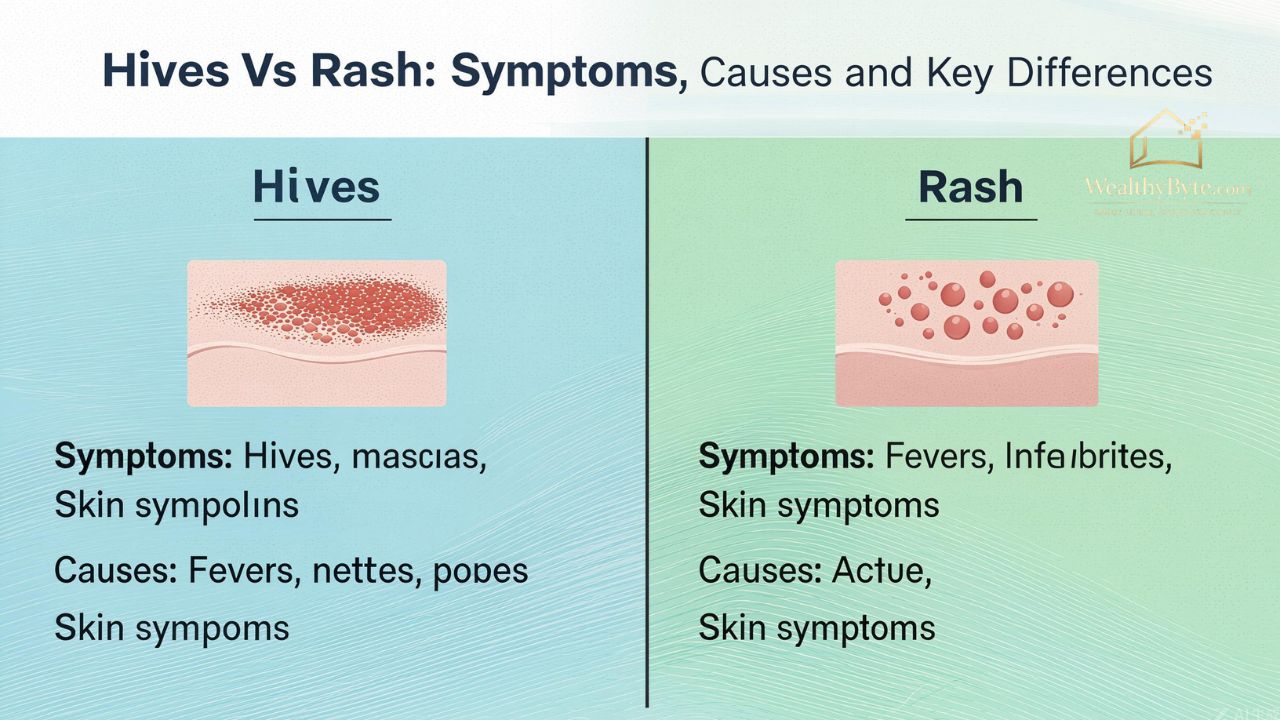
The biggest distinction in the hives vs rash discussion is that hives are a specific allergic-style skin reaction, while rashes represent a much larger category of skin conditions.
Quick Comparison Table
| Feature | Hives | Rash |
|---|---|---|
| Appearance | Raised welts | Varies widely |
| Texture | Swollen | May be flat, dry, blistered |
| Duration | Often short-term | Can last days to months |
| Movement | Changes location quickly | Usually stays consistent |
| Trigger | Often allergic or immune-related | Many possible causes |
| Itching | Usually severe | Variable |
One Important Clue
If bumps appear suddenly, itch intensely, and move around the body within hours, hives become more likely.
If skin changes remain fixed in one area for days or weeks, a rash may be the better explanation.
Common Causes of Hives
Understanding triggers helps explain why hives can seem so unpredictable.
Allergic Reactions
One of the most common causes involves allergies.
Possible allergens include:
- Peanuts
- Shellfish
- Eggs
- Milk
- Antibiotics
- Pain relievers
Some reactions happen within minutes of exposure.
Stress and Anxiety
Emotional stress can absolutely trigger hives in sensitive individuals.
The connection between stress hormones and immune activity is stronger than many people realize.
Physical Triggers
Certain forms of hives occur because of physical stimulation.
Examples include:
- Heat hives
- Cold-induced hives
- Pressure hives
- Exercise-induced hives
- Sunlight-triggered hives
Viral Infections
Colds, flu viruses, and infections can activate the immune system and trigger temporary hives.
Children frequently experience this type.
Common Causes of Skin Rashes
Unlike hives, rashes have an enormous range of possible causes.
Eczema
Eczema causes inflamed, itchy skin that often becomes dry and cracked.
It commonly affects:
- Hands
- Arms
- Behind knees
- Neck
- Face
Contact Dermatitis
This happens when skin reacts to irritants or allergens.
Common culprits include:
- Soap
- Fragrances
- Detergents
- Jewelry
- Latex
- Plants like poison ivy
Heat Rash
Hot weather and sweating can block sweat ducts, causing tiny red bumps.
Babies experience this often, but adults can too.
Fungal Infections
Ringworm and athlete’s foot are fungal rashes that thrive in warm, moist environments.
Autoimmune Conditions
Some chronic rashes connect to autoimmune disorders like:
- Lupus
- Psoriasis
- Dermatomyositis
Symptoms That Help Identify Hives vs Rash
The symptoms themselves often provide the biggest clues.
Hives Symptoms
Hives usually involve:
- Intense itching
- Raised skin welts
- Rapid appearance
- Rapid disappearance
- Swelling beneath skin
Some people also experience angioedema, which is deeper swelling around the lips, eyes, or throat.
Rash Symptoms
Rashes may involve:
- Dryness
- Scaling
- Flaking
- Burning
- Blisters
- Cracking
- Oozing
The texture often feels very different from hives.
Timing Matters
One practical clue in the hives vs rash comparison is speed.
Hives:
- Appear fast
- Change quickly
- Fade quickly
Many rashes:
- Develop gradually
- Persist longer
- Remain localized
When Hives Become Dangerous
Most hives are uncomfortable but not dangerous. However, there are important exceptions.
Signs of Anaphylaxis
Seek emergency care immediately if hives occur with:
- Trouble breathing
- Swollen tongue
- Throat tightness
- Dizziness
- Fainting
- Rapid heartbeat
This may indicate anaphylaxis, a severe allergic reaction.
Chronic Hives
If hives continue for more than six weeks, they’re considered chronic.
Chronic hives may connect to:
- Autoimmune disorders
- Thyroid disease
- Chronic infections
- Unknown immune triggers
Swelling Beneath the Skin
Deep swelling, especially near the airway, should never be ignored.
Diagnosing Skin Reactions
Doctors diagnose hives and rashes primarily through physical examination and medical history.
Questions a Doctor May Ask
- When did symptoms begin?
- What foods were eaten recently?
- Any new medications?
- Exposure to chemicals or plants?
- Does the rash move?
- Is there fever or illness?
Allergy Testing
For recurring hives, allergy testing may help identify triggers.
Skin Biopsies
Persistent or unusual rashes sometimes require biopsy testing to rule out autoimmune or inflammatory diseases.
Treatments for Hives and Rashes
Treatment depends heavily on the underlying cause.
Hives Treatments
Common approaches include:
| Treatment | Purpose |
|---|---|
| Antihistamines | Reduce itching and swelling |
| Cool Compresses | Calm irritation |
| Steroids | Severe inflammation control |
| Trigger Avoidance | Prevent recurrence |
Most mild hives improve within hours or days.
Rash Treatments
Rash treatment varies widely.
Possible therapies include:
- Moisturizers
- Corticosteroid creams
- Antifungal medication
- Antibiotics
- Avoiding irritants
- Immune-modulating drugs
Why Self-Diagnosis Gets Risky
Many skin conditions overlap visually. A fungal infection may resemble eczema, while hives may look similar to allergic dermatitis.
That’s why persistent skin issues deserve professional evaluation.
Home Remedies and Skin Care Tips
Simple home care measures can significantly reduce discomfort.
Helpful Skin Care Habits
- Use fragrance-free moisturizers
- Avoid hot showers
- Wear loose cotton clothing
- Keep nails trimmed
- Avoid scratching
Cooling the Skin
Cool compresses help calm itching for both hives and many rashes.
Avoid Harsh Products
Strong soaps and scented skincare products often worsen irritation.
Track Triggers
Keeping a symptom journal may reveal hidden connections involving:
- Foods
- Weather
- Stress
- Detergents
- Medications
Preventing Future Skin Flare-Ups
Preventive care matters more than people think.
Manage Allergies
People with known allergies should avoid confirmed triggers whenever possible.
Strengthen Skin Barrier Health
Healthy skin retains moisture better and resists irritation.
Helpful strategies include:
- Daily moisturization
- Gentle cleansers
- Humidifiers in dry climates
- Adequate hydration
Reduce Stress
Stress management can genuinely reduce flare-ups in conditions like hives, eczema, and psoriasis.
Watch Environmental Factors
Heat, sweat, cold air, and friction may worsen skin sensitivity.
Hives vs Rash in Children
Children frequently develop both hives and rashes.
Common Childhood Triggers
- Viral infections
- Food allergies
- Detergents
- Heat
- Eczema
Parents often panic when sudden skin changes appear, but many childhood rashes are temporary and mild.
However, breathing difficulty or facial swelling requires immediate medical attention.
Hives vs Rash During Pregnancy
Pregnancy causes major hormonal and immune system changes.
Some women develop:
- Itchy pregnancy rashes
- Heat-related irritation
- Stress hives
- Stretch-related skin reactions
Doctors should evaluate severe itching or widespread rashes during pregnancy to rule out more serious conditions.
FAQs
Frequently Asked Questions
Are hives considered a rash?
Technically yes. Hives are a specific type of rash caused by histamine release and skin swelling.
How can I tell if it’s hives or a rash?
Hives usually appear as raised itchy welts that move around quickly, while many rashes stay fixed in one area and develop more slowly.
Can stress cause hives?
Yes. Emotional stress can trigger immune reactions and worsen hives in some individuals.
Do hives always itch?
Most hives itch intensely, though mild cases may only feel warm or irritated.
Are rashes contagious?
Some are, some aren’t. Viral, fungal, or bacterial rashes may spread, while eczema and hives are not contagious.
When should I worry about a rash?
Seek medical attention for severe pain, fever, blistering, facial swelling, breathing problems, or rapidly spreading skin reactions.
Can food allergies cause rashes?
Yes. Food allergies may trigger hives, eczema flare-ups, or other skin reactions.
How long do hives usually last?
Individual hives often disappear within hours, though outbreaks can continue for several days.
What’s the best treatment for itchy skin?
It depends on the cause. Antihistamines help hives, while moisturizers or steroid creams may help inflammatory rashes.
Conclusion
Skin reactions can feel confusing, frustrating, and even frightening—especially when symptoms appear suddenly. Understanding the difference between hives vs rash helps remove some of that uncertainty and makes it easier to respond appropriately.
Hives tend to appear rapidly, itch intensely, and move around the body, often linked to allergies or immune reactions. Rashes, on the other hand, represent a much broader group of skin conditions ranging from eczema and heat rash to infections and autoimmune diseases.
The good news is that many skin reactions improve with proper care, trigger management, and simple lifestyle adjustments. Still, persistent, painful, or severe symptoms should never be ignored.
Your skin often reflects what’s happening inside the body. Paying attention to those signals—and seeking help when needed—can make a huge difference in long-term comfort and health.