Introduction
Some mornings feel different. You wake up after what should have been a full night’s sleep, yet your arms feel weighed down, your legs seem harder to move, and even simple tasks suddenly feel exhausting. If you have ever asked yourself, “why does my body feel heavy,” you are far from alone.
That strange sensation of physical heaviness can be unsettling. For some people, it appears after stress or poor sleep. For others, it lingers for weeks and starts interfering with work, relationships, exercise, and mental clarity. The frustrating part is that body heaviness is not a condition by itself. Instead, it is often a signal from your body that something deeper needs attention.
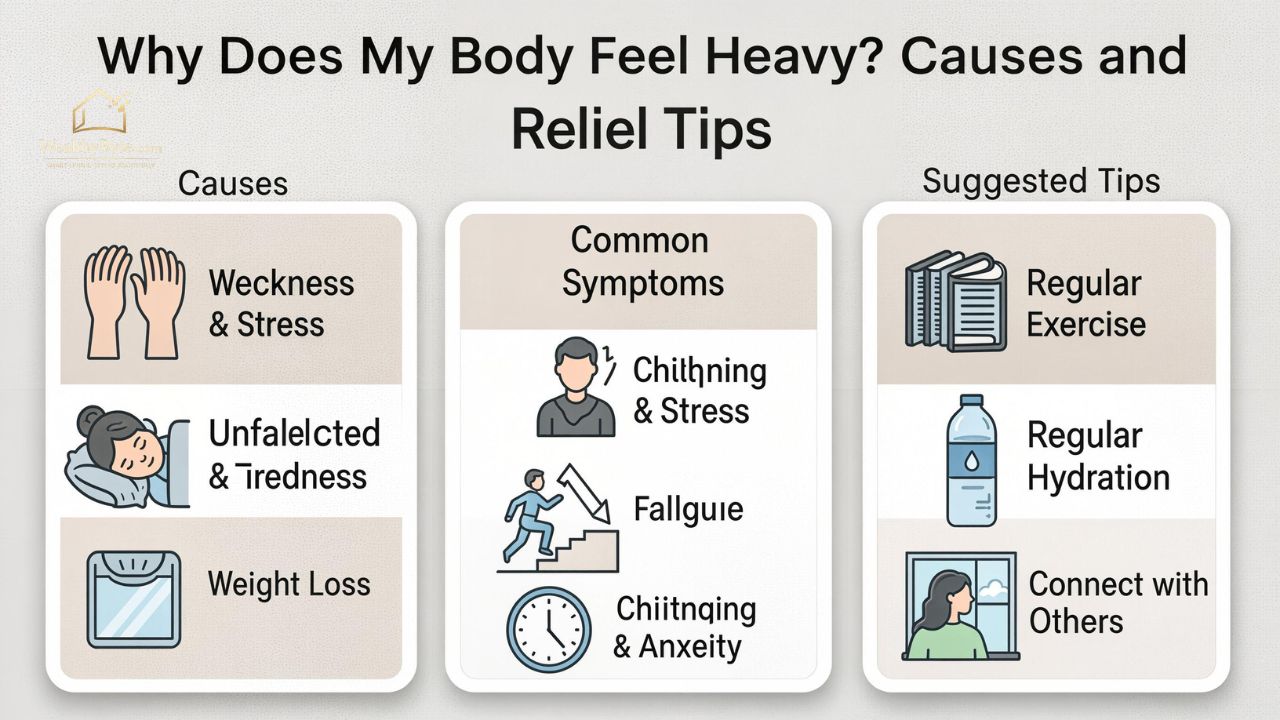
[Infographic: Common causes of body heaviness including stress, sleep deprivation, dehydration, nutritional deficiencies, and chronic illness]
According to the Centers for Disease Control and Prevention, adults who consistently experience fatigue or exhaustion are more likely to struggle with mood disorders, reduced concentration, and lower physical performance. In today’s fast-paced world, many people ignore those warning signs until they become impossible to overlook.
This guide explores the most common causes behind body heaviness, how symptoms connect to physical and emotional health, and what practical steps may help you feel lighter, stronger, and more energized again.
Table of Contents
- Understanding Body Heaviness
- Why Does My Body Feel Heavy After Waking Up
- Physical Causes of Body Heaviness
- Mental and Emotional Factors
- Nutritional Deficiencies and Fatigue
- Sleep Problems and Energy Levels
- Chronic Health Conditions Linked to Body Heaviness
- When to See a Doctor
- Ways to Feel More Energized Naturally
- Lifestyle Habits That Improve Energy
- Frequently Asked Questions
- Conclusion
Understanding Body Heaviness
The feeling of heaviness in the body is often described as a sensation of physical exhaustion, muscle weakness, sluggishness, or pressure throughout the limbs. Some people compare it to walking through water or carrying invisible weight.
Interestingly, body heaviness does not always mean the muscles themselves are weak. In many cases, the nervous system, hormones, sleep quality, stress response, or immune system may all play a role.
Common Symptoms That Accompany Body Heaviness
People who wonder why does my body feel heavy often report additional symptoms such as:
- Persistent fatigue
- Brain fog
- Low motivation
- Dizziness
- Muscle aches
- Poor concentration
- Mood swings
- Headaches
- Sleepiness during the day
- Shortness of breath
The experience varies from person to person. Someone dealing with emotional burnout may feel mentally drained and physically sluggish, while another person with anemia may notice weakness and rapid exhaustion during normal activity.
Why the Feeling Can Be Hard to Explain
One reason body heaviness feels confusing is that it develops differently depending on the cause. Sometimes symptoms appear suddenly after illness or stress. Other times, they slowly build over months.
For example, a busy office worker might assume exhaustion is simply part of adulthood until they realize climbing stairs now feels unusually difficult. In reality, the body often sends subtle signals long before serious fatigue becomes obvious.
Why Does My Body Feel Heavy After Waking Up
Waking up feeling exhausted can make the entire day feel harder before it even begins.
Many people ask why does my body feel heavy first thing in the morning because they expect sleep to restore energy, not drain it further.
Poor Sleep Quality
One of the most common explanations is fragmented or low-quality sleep. Even if someone spends eight hours in bed, the body may not reach the deeper stages of restorative sleep.
Several factors interfere with recovery during sleep:
- Stress and anxiety
- Sleep apnea
- Frequent waking during the night
- Excessive screen time before bed
- Alcohol consumption
- Irregular sleep schedules
Sleep apnea deserves special attention because many people do not realize they have it. This condition interrupts breathing repeatedly during sleep, reducing oxygen levels and leaving people exhausted during the day.
Morning Inflammation and Stiffness
Some individuals experience inflammation-related heaviness after waking. This may occur with conditions like arthritis, fibromyalgia, or autoimmune disorders.
Muscles and joints can feel stiff after long periods of inactivity overnight. However, if symptoms continue throughout the day or worsen over time, medical evaluation becomes important.
[Image Suggestion: A tired person sitting on the edge of a bed looking physically drained]
Physical Causes of Body Heaviness
The body relies on multiple systems working together efficiently. When one system struggles, energy production often suffers.
Dehydration
Even mild dehydration can affect circulation, muscle performance, and cognitive function.
Signs of dehydration include:
- Dry mouth
- Dizziness
- Headaches
- Muscle fatigue
- Dark urine
- Low energy
Many people underestimate how little water they drink daily. Caffeine-heavy routines and hot weather can worsen the problem.
Viral Infections and Illness
After viral infections like influenza or COVID-19, some people experience lingering fatigue and body heaviness for weeks.
The immune system uses significant energy while fighting infections. Even after the illness improves, the body may still need time to recover fully.
Muscle Overuse and Physical Exhaustion
Intense exercise, physically demanding jobs, or overtraining can leave muscles feeling unusually heavy.
Athletes sometimes experience “dead legs,” where muscles lose their usual responsiveness due to accumulated fatigue.
That said, complete inactivity can also contribute to sluggishness. The body often feels heavier when movement becomes limited for long periods.
Circulation Problems
Poor circulation may reduce oxygen delivery to tissues, causing fatigue and heaviness.
Possible signs include:
- Cold hands and feet
- Swelling in the legs
- Tingling sensations
- Cramping
- Varicose veins
People who sit for extended periods, especially at desks or during travel, commonly notice these symptoms.
Mental and Emotional Factors
The connection between emotional health and physical sensations is stronger than many people realize.
Stress does not only affect the mind. It influences hormones, muscle tension, inflammation, sleep, and nervous system activity.
Anxiety and Stress Responses
Chronic anxiety keeps the body in a heightened state of alertness. Over time, this constant activation drains energy reserves.
People under prolonged stress may experience:
- Muscle tightness
- Fatigue
- Chest heaviness
- Difficulty relaxing
- Emotional exhaustion
Ironically, stress can make people feel both restless and physically heavy at the same time.
Depression and Emotional Burnout
Depression often affects physical energy as much as emotional well-being.
Someone struggling emotionally may notice:
- Slow movement
- Low motivation
- Heavy limbs
- Difficulty getting out of bed
- Increased sleepiness
This is not laziness or weakness. Emotional distress changes brain chemistry, hormone levels, and nervous system function.
Mental Overload and Decision Fatigue
Modern life constantly demands attention. Endless notifications, deadlines, social pressures, and multitasking can overwhelm the brain.
In reality, mental exhaustion often shows up physically. A person might describe feeling “drained to the bone” after weeks of nonstop stress.
Nutritional Deficiencies and Fatigue
Food plays a major role in how energized or sluggish the body feels.
People who frequently ask why does my body feel heavy sometimes discover the issue is linked to nutrient deficiencies.
Iron Deficiency and Anemia
Iron helps carry oxygen throughout the body. When iron levels drop, muscles and organs receive less oxygen, leading to fatigue and weakness.
Common symptoms include:
- Pale skin
- Dizziness
- Rapid heartbeat
- Weakness
- Cold extremities
Women, vegetarians, and people with digestive disorders face higher risk for iron deficiency.
Vitamin D Deficiency
Low vitamin D levels are surprisingly common worldwide.
Research has linked vitamin D deficiency to:
- Muscle weakness
- Bone pain
- Fatigue
- Mood changes
- Reduced immune function
People who spend little time outdoors or live in colder climates may struggle with lower levels.
Low Magnesium and Electrolyte Imbalances
Magnesium supports muscle and nerve function.
Deficiency symptoms may include:
- Muscle cramps
- Weakness
- Anxiety
- Sleep problems
- Fatigue
Electrolyte imbalances from excessive sweating, dehydration, or poor nutrition can also contribute to feelings of heaviness.
[Image Suggestion: Healthy foods rich in iron, magnesium, and vitamins arranged on a kitchen table]
Sleep Problems and Energy Levels
Sleep is one of the body’s most important recovery systems.
Without adequate restorative sleep, energy production, hormone balance, and cognitive performance all decline.
Common Sleep Disorders
| Sleep Disorder | Potential Effects |
|---|---|
| Sleep apnea | Morning fatigue and headaches |
| Insomnia | Mental and physical exhaustion |
| Restless leg syndrome | Interrupted sleep quality |
| Circadian rhythm disorders | Daytime sleepiness and sluggishness |
| Narcolepsy | Sudden sleep episodes and fatigue |
Why Sleep Debt Builds Up Slowly
Many adults operate in a constant sleep deficit without realizing it.
Sleeping five or six hours nightly may seem manageable at first. However, over time the body accumulates sleep debt, increasing fatigue and reducing physical resilience.
Some people adapt emotionally to exhaustion and assume feeling heavy is simply “normal adulthood.” It is not.
Chronic Health Conditions Linked to Body Heaviness
Sometimes body heaviness reflects underlying medical conditions requiring professional attention.
Thyroid Disorders
The thyroid gland helps regulate metabolism and energy production.
Hypothyroidism, or underactive thyroid function, commonly causes:
- Fatigue
- Weight gain
- Cold sensitivity
- Depression
- Muscle weakness
- Slowed thinking
Many people live with undiagnosed thyroid issues for years because symptoms develop gradually.
Fibromyalgia
Fibromyalgia causes widespread pain, fatigue, and tenderness throughout the body.
People with fibromyalgia often describe feeling physically weighed down even after resting.
Chronic Fatigue Syndrome
Chronic fatigue syndrome, also called ME/CFS, involves severe exhaustion that does not improve with rest.
Symptoms may include:
- Post-exertional fatigue
- Brain fog
- Sleep disturbances
- Muscle pain
- Dizziness
Simple activities can become overwhelming for people living with this condition.
Diabetes and Blood Sugar Fluctuations
Unstable blood sugar levels can dramatically influence energy.
High blood sugar may cause:
- Fatigue
- Increased thirst
- Blurred vision
- Weakness
Low blood sugar, on the other hand, can trigger shakiness, dizziness, and sudden exhaustion.
Autoimmune Conditions
Conditions like lupus, rheumatoid arthritis, and multiple sclerosis may cause chronic fatigue and heaviness through ongoing inflammation.
However, symptoms often fluctuate, which makes diagnosis challenging.
When to See a Doctor
Occasional fatigue after stress or poor sleep is common. Persistent or worsening symptoms deserve attention.
You should consider medical evaluation if body heaviness:
- Lasts several weeks
- Interferes with daily activities
- Includes chest pain or breathing difficulty
- Appears with fainting or dizziness
- Causes severe weakness
- Develops suddenly
- Comes with unexplained weight changes
What Doctors May Check
Healthcare providers often evaluate:
- Blood pressure
- Thyroid function
- Iron levels
- Vitamin deficiencies
- Sleep quality
- Blood sugar levels
- Neurological symptoms
The goal is to identify whether symptoms relate to lifestyle habits, mental health, nutritional concerns, or underlying illness.
Ways to Feel More Energized Naturally
If you constantly wonder why does my body feel heavy, improving daily habits may help restore energy and resilience.
Improve Sleep Hygiene
Healthy sleep habits can significantly improve energy.
Helpful strategies include:
- Going to bed consistently
- Reducing screen exposure before sleep
- Keeping the bedroom cool and dark
- Avoiding caffeine late in the day
- Limiting alcohol before bedtime
Stay Hydrated
Proper hydration supports circulation, temperature regulation, and muscle function.
A simple habit like carrying a reusable water bottle throughout the day can make a noticeable difference.
Prioritize Nutrient-Dense Foods
Balanced meals help stabilize energy.
Foods that support sustained energy include:
- Leafy greens
- Lean proteins
- Nuts and seeds
- Whole grains
- Fatty fish
- Fresh fruits
Highly processed foods may provide quick energy spikes followed by crashes.
Move Your Body Regularly
Although fatigue often makes exercise feel difficult, gentle movement may actually improve circulation and energy over time.
Walking, stretching, yoga, and low-impact strength training are excellent starting points.
Reduce Stress Levels
Stress management matters more than most people realize.
Helpful techniques include:
- Meditation
- Journaling
- Deep breathing exercises
- Spending time outdoors
- Talking with supportive friends
- Therapy or counseling
The nervous system recovers more effectively when stress levels become manageable.
Lifestyle Habits That Improve Energy
Long-term energy often depends on consistency rather than dramatic changes.
Create Sustainable Daily Routines
People with steady routines often experience more balanced energy levels.
Helpful routines may include:
- Regular meal timing
- Consistent exercise
- Morning sunlight exposure
- Screen-free evenings
- Scheduled relaxation time
Limit Energy Drainers
Certain habits quietly drain energy over time.
These include:
- Excessive alcohol consumption
- Smoking
- Constant multitasking
- Excessive sugar intake
- Chronic sleep deprivation
Small improvements add up surprisingly fast.
Listen to Your Body
One of the healthiest habits is paying attention to warning signs instead of pushing through them endlessly.
Fatigue is not always weakness. Sometimes it is the body’s way of demanding recovery, balance, or medical attention.
Frequently Asked Questions
Why does my body feel heavy and tired all the time?
Persistent body heaviness may result from stress, poor sleep, dehydration, nutritional deficiencies, chronic illness, or emotional burnout.
Can anxiety make your body feel heavy?
Yes. Anxiety and chronic stress can increase muscle tension, exhaustion, and nervous system overload, leading to physical heaviness.
Does dehydration cause body heaviness?
Even mild dehydration can reduce circulation and muscle performance, contributing to weakness and sluggishness.
Why do my legs feel heavy when walking?
Heavy legs may relate to muscle fatigue, poor circulation, overuse, or prolonged inactivity.
Can vitamin deficiencies make the body feel weak?
Absolutely. Iron, vitamin D, magnesium, and B vitamin deficiencies commonly contribute to fatigue and weakness.
Is body heaviness related to depression?
Yes. Depression often affects physical energy and motivation in addition to emotional health.
When should I worry about body heaviness?
Seek medical attention if symptoms become severe, persistent, sudden, or occur with chest pain, fainting, or breathing difficulties.
Does exercise help reduce heaviness in the body?
Gentle exercise may improve circulation, energy production, and mood over time, especially when paired with proper rest and nutrition.
Conclusion
Feeling physically heavy can be frustrating, confusing, and emotionally draining, especially when it starts affecting everyday life. The sensation may stem from something relatively simple like dehydration or poor sleep, or it could signal deeper issues involving stress, hormones, nutrition, or chronic illness.
The important thing is not to ignore persistent symptoms. Our bodies constantly communicate through energy levels, mood changes, and physical sensations. Paying attention early often makes recovery easier.
Whether the solution involves better sleep, improved nutrition, stress reduction, medical treatment, or lifestyle adjustments, small consistent steps can gradually restore strength and vitality. Sometimes the answer to feeling lighter begins with finally listening to what your body has been trying to say all along.