Introduction
That soft, stubborn weight around the middle can feel personal, especially when you are eating better, walking more, and still not seeing much change. A hormonal belly is often blamed when belly fat, bloating, or waistline changes seem tied to stress, menopause, PCOS, thyroid issues, poor sleep, or insulin resistance.
The truth is a little more layered. Hormones can influence where the body stores fat, how hungry you feel, how well you sleep, and how your metabolism handles blood sugar. Lower estrogen during menopause is linked with more central fat storage, while chronic stress and cortisol may affect appetite and abdominal fat patterns. (Mayo Clinic)
![Infographic: Hormones linked to belly fat, including cortisol, insulin, estrogen, thyroid hormones, and sleep-related hunger hormones]
This matters because belly fat is not only about appearance. Visceral fat—the deeper fat stored around abdominal organs—is associated with higher cardiometabolic risk, including insulin resistance and heart-related concerns. (Mayo Clinic)
Table of Contents
What Is Hormonal Belly?
Common Signs of Hormonal Belly
Hormones That Can Affect Belly Fat
What Causes Hormonal Belly?
Hormonal Belly vs Bloating
Medical Conditions Linked With Belly Weight Gain
How to Reduce Hormonal Belly Naturally
Foods That Support Hormone Balance
Exercise Strategies That Actually Help
When to See a Doctor
FAQs
Conclusion
What Is Hormonal Belly?
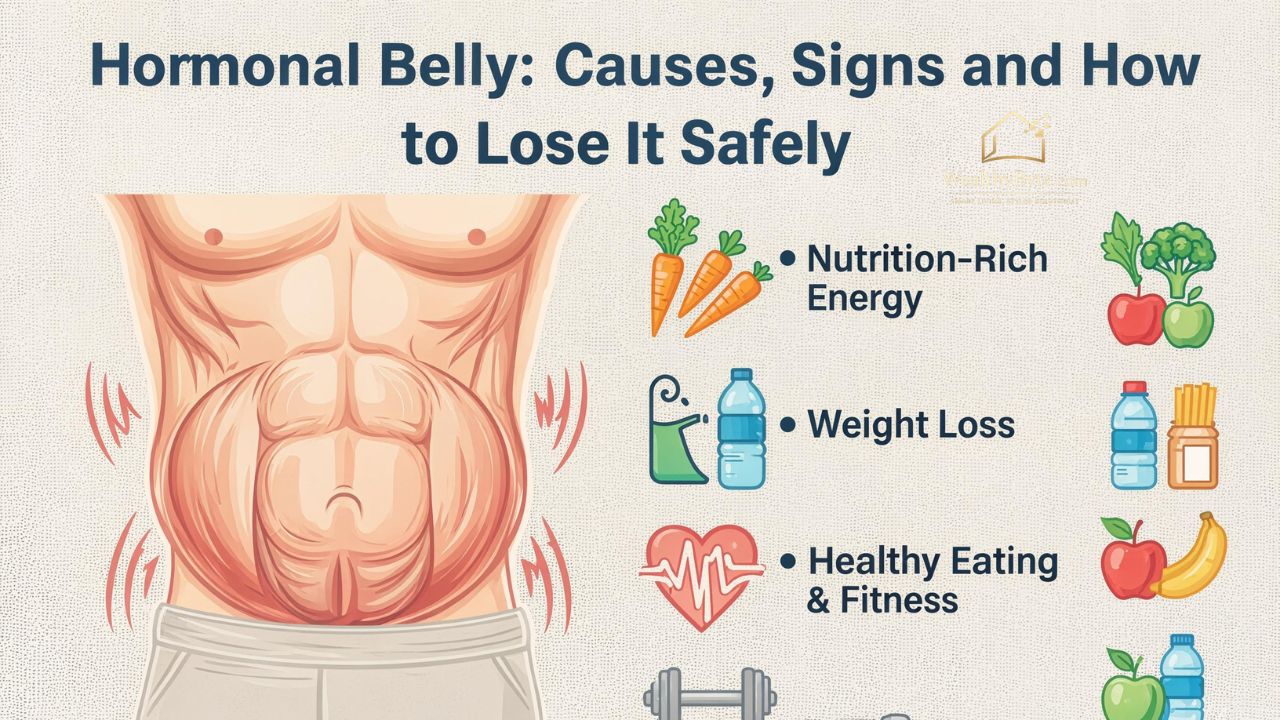
Hormonal belly is a casual term people use for stubborn abdominal weight gain or bloating that seems connected to hormone changes. It is not a formal medical diagnosis, but it can describe a real experience: your waist changes even though your habits have not changed much.
In medical terms, this may involve abdominal fat, visceral fat, fluid retention, digestive bloating, or changes in body composition. For example, many women notice more belly fat during perimenopause and menopause, partly because estrogen appears to influence where fat is stored. (Mayo Clinic)
hormonal belly can also be connected with lifestyle factors that affect hormones indirectly, such as poor sleep, long-term stress, ultra-processed foods, alcohol, low protein intake, and loss of muscle mass.
Common Signs of Hormonal Belly
Not every rounder stomach is hormone-related. Still, certain patterns can offer clues.
Possible Symptoms
- Weight gain mainly around the waist
- Bloating that worsens before a period
- Sugar cravings or intense hunger
- Fatigue after meals
- Irregular periods
- Acne or unwanted facial hair
- Sleep disruption
- Mood swings or anxiety
- Hot flashes or night sweats
- Difficulty losing weight despite effort
Decorating Ideas At Home
Decorating Ideas At Home is a home décor and interior design resource offering creative inspiration, practical decorating tips, room makeover ideas, DIY projects, furniture guidance, and stylish solutions for creating beautiful and comfortable living spaces.
ThinkSono
ThinkSono is a technology-focused keyword associated with innovative healthcare solutions, medical technology, and ultrasound-related tools. The term can be used when discussing healthcare innovation, diagnostic technology, medical devices, and digital health solutions.
legalcasenewz
legalcasenewz is a legal information and news-focused keyword covering topics such as legal cases, court decisions, law updates, legal analysis, and important developments in the justice system.
What It May Feel Like
Some people describe hormonal belly as a “heavy” lower-abdominal fullness. Others notice a firm, higher belly after stressful weeks or a soft waistline change during menopause.
That said, symptoms overlap. Digestive issues, constipation, food intolerance, pregnancy, medications, and natural aging can all change the abdomen too.
Hormones That Can Affect Belly Fat
Hormones are chemical messengers. They help regulate appetite, metabolism, stress response, reproduction, sleep, and blood sugar. Cleveland Clinic describes hormonal imbalance as having too much or too little of one or more hormones, and even small changes can affect the body. (Cleveland Clinic)
Cortisol
Cortisol is often called the stress hormone. Short bursts are normal and useful. However, long-term stress may increase appetite, cravings for comfort foods, insulin resistance, and abdominal fat storage in some people. (PMC)
Insulin
Insulin helps move glucose from the blood into cells. When cells become less responsive to insulin, the body may store more fat and struggle with blood sugar control. Abdominal obesity and insulin resistance often occur together.
Estrogen
Estrogen helps influence fat distribution. As estrogen declines during menopause, fat storage may shift from hips and thighs toward the abdomen. Mayo Clinic notes that menopause-related hormonal changes tend to make abdominal weight gain more likely, though aging, genetics, lifestyle, and muscle loss also matter. (Mayo Clinic)
Thyroid Hormones
Thyroid hormones help regulate metabolism. An underactive thyroid can contribute to fatigue, weight gain, constipation, cold sensitivity, and dry skin.
Ghrelin and Leptin
Ghrelin increases hunger. Leptin signals fullness. Poor sleep can disrupt appetite regulation, making late-night snacking and overeating more likely.
What Causes Hormonal Belly?
There is rarely one single cause. In reality, hormonal belly usually develops from a mix of biology, habits, age, stress, and health history.
Chronic Stress
Imagine a person working late, sleeping five hours, skipping breakfast, then craving sweets by 4 p.m. That is not a willpower failure. Stress can push the body toward higher-calorie choices and poor recovery.
Menopause and Perimenopause
During the menopausal transition, many women experience changes in body composition, including more central or visceral fat. Research reviews link menopause with increased abdominal fat and reduced lean mass. (PMC)
Poor Sleep
Sleep affects hunger hormones, insulin sensitivity, mood, and decision-making. Even a few bad nights can make cravings feel louder.
Low Muscle Mass
Muscle helps the body use glucose and burn energy. As people age, muscle mass tends to decline, especially without strength training. Mayo Clinic notes that age-related muscle loss can slow calorie use and make weight maintenance harder. (Mayo Clinic)
Highly Processed Diets
Sugary drinks, refined carbohydrates, low-fiber snacks, and alcohol can worsen blood sugar swings and increase calorie intake without much fullness.
Hormonal Belly vs Bloating
A bloated belly and belly fat can look similar in the mirror, but they are different.
| Feature | Belly Fat | Bloating |
|---|---|---|
| Timing | Builds gradually | Can appear within hours |
| Feel | Soft or firm tissue | Tight, stretched, gassy |
| Triggers | Hormones, calories, inactivity | Food intolerance, constipation, gas |
| Change overnight | Usually minimal | Often changes quickly |
| Common clues | Waist grows over months | Burping, gas, cramps |
| Bloating may worsen after dairy, beans, carbonated drinks, artificial sweeteners, or high-FODMAP foods. Belly fat usually changes more slowly. |
Medical Conditions Linked With Belly Weight Gain
PCOS
Polycystic ovary syndrome can involve insulin resistance, irregular periods, acne, unwanted hair growth, and weight gain around the abdomen.
Hypothyroidism
An underactive thyroid can slow metabolism and cause fatigue, constipation, and modest weight gain.
Cushing Syndrome
This is rare, but high cortisol from medical causes can lead to central weight gain, purple stretch marks, muscle weakness, and easy bruising.
Menopause
Menopause is one of the most common life stages associated with hormonal belly. However, hormones are only part of the story. Activity level, diet, sleep, and genetics still matter. (Mayo Clinic)
How to Reduce Hormonal Belly Naturally
There is no magic detox, tea, or seven-day reset that fixes hormones overnight. But small, consistent changes can improve metabolic health.
Start With Protein
Protein helps preserve muscle and supports fullness. Good options include eggs, Greek yogurt, lentils, tofu, chicken, fish, cottage cheese, beans, and lean meats.
Add Fiber Slowly
Fiber supports gut health and blood sugar balance. Increase it gradually to avoid gas.
Try:
- Oats
- Berries
- Lentils
- Chia seeds
- Vegetables
- Whole grains
- Beans
· Kdarchitects.co — Architecture, interior design, home design, building design, architectural planning, and construction-related ideas.
· Rapidhomedirect.us — Home improvement, home renovation, home décor, DIY projects, furniture, household products, and practical home ideas.
· Famousparenting.us — Parenting, family life, children, pregnancy, child development, parenting tips, family activities, and advice for parents.
· Masterrealtysolutions.co — Real estate, property buying and selling, homeownership, housing, property investment, mortgages, real estate advice, and market insights.
· Pushyourdesign.co — Interior design, home décor, creative design ideas, furniture, room styling, architecture, renovation, and modern home design.
· Betterthisworld.co — Personal development, lifestyle, productivity, motivation, self-improvement, career growth, relationships, and improving everyday life.
Manage Stress Like It Matters
Because it does. Even ten minutes of breathing, walking, prayer, journaling, or stretching can help shift the nervous system out of constant emergency mode.
Sleep Before Supplements
Before buying another hormone-balancing product, protect sleep. A dark room, consistent bedtime, less caffeine, and fewer late-night screens can make a bigger difference than people expect.
Reduce Alcohol
Alcohol can add calories, disrupt sleep, affect blood sugar, and make late-night eating more likely.
Foods That Support Hormone Balance
Food does not “reset” hormones instantly, but a steady diet pattern can support insulin sensitivity, gut health, inflammation control, and appetite regulation.
Helpful Food Choices
| Food Group | Why It Helps |
|---|---|
| Lean protein | Supports muscle and fullness |
| High-fiber carbs | Helps blood sugar stability |
| Healthy fats | Supports satisfaction and nutrient absorption |
| Fermented foods | May support gut microbiome diversity |
| Colorful plants | Provide antioxidants and micronutrients |
Simple Plate Formula
Build most meals like this:
- ½ plate vegetables or fruit
- ¼ plate protein
- ¼ plate high-fiber carbohydrate
- Add healthy fat, such as olive oil, avocado, nuts, or seeds
This is not glamorous, but it works better than extreme dieting for most people.
Exercise Strategies That Actually Help
If hormonal belly is tied to insulin resistance, menopause, stress, or muscle loss, exercise should include more than endless cardio.
Strength Training
Lift weights, use resistance bands, or do bodyweight exercises two to four times weekly. Muscle helps improve glucose use and body composition.
Walking
A 10–20 minute walk after meals can support blood sugar control and digestion. It is simple, underrated, and realistic.
Zone 2 Cardio
Moderate cardio—where you can talk but not sing—supports heart health and fat metabolism.
Avoid Overtraining
More is not always better. If workouts leave you exhausted, sleepless, and hungrier, your body may need recovery, not punishment.
When to See a Doctor
You should speak with a healthcare professional if belly weight gain is sudden, severe, or paired with symptoms like missed periods, heavy bleeding, facial hair growth, severe fatigue, depression, rapid heartbeat, easy bruising, or unexplained weight changes.
Ask about testing when appropriate, including:
- Thyroid panel
- Fasting glucose
- A1C
- Lipid profile
- Reproductive hormones
- PCOS evaluation
- Cortisol testing if symptoms suggest it
FAQs
What does hormonal belly look like?
It often appears as weight gain around the waist, lower abdomen, or midsection. However, appearance alone cannot confirm a hormone issue.
Is hormonal belly real?
The phrase is informal, but hormone changes can affect fat storage, appetite, metabolism, and bloating.
Can stress cause hormonal belly?
Chronic stress may contribute to abdominal fat through cortisol, appetite changes, cravings, sleep disruption, and insulin resistance. (PMC)
Does menopause cause belly fat?
Menopause can make abdominal fat gain more likely, especially as estrogen declines, but aging, lifestyle, genetics, and muscle loss also play major roles. (Mayo Clinic)
How do I know if it is fat or bloating?
Bloating changes quickly and often feels tight or gassy. Fat gain usually develops gradually and does not disappear overnight.
Can I lose hormonal belly without medication?
Many people improve waist size through sleep, stress management, strength training, protein, fiber, and blood sugar-friendly meals. Medical treatment may be needed if an underlying condition is present.
What foods make hormonal belly worse?
Sugary drinks, refined carbs, excess alcohol, ultra-processed snacks, and foods that personally trigger bloating can make symptoms worse.
How long does it take to reduce hormonal belly?
Visible change often takes several weeks to months. The timeline depends on hormones, age, sleep, diet, activity, medications, and consistency.
Conclusion
Hormonal belly can feel frustrating because it does not always respond to simple calorie cutting or random ab workouts. The body is more complicated than that. Stress, insulin, estrogen, thyroid function, sleep, muscle mass, digestion, and age can all influence what happens around the waist.
The encouraging part is that you are not powerless. Better sleep, strength training, steady meals, more protein, more fiber, fewer blood sugar spikes, and calmer stress routines can gradually shift the body in a healthier direction.
And if something feels off—irregular cycles, sudden weight gain, crushing fatigue, severe bloating, or symptoms that worry you—get checked. The goal is not to fight your body. It is to understand it, support it, and give it a better chance to feel strong again.