Introduction
sound rough, reaching into a bag for quick relief feels almost automatic. Then you spot an old pack in a drawer and wonder, do cough drops expire or are they one of those things that last forever?
That question matters more than most people think. Cough drops sit in purses, glove boxes, desk drawers, travel kits, and kitchen cabinets for months at a time. Since many are regulated as over the counter drug products, their expiration dates are tied to testing for strength, quality, and purity, not just taste or texture. FDA guidance also tells consumers to follow expiration dates rather than treat them like loose suggestions.
The short answer is yes, cough drops can expire. Still, the better answer is a bit more useful: most expired cough drops are more likely to lose freshness, texture, and symptom-relief strength over time than to suddenly turn harmful overnight, especially if they were kept cool and dry. The catch is that once the date has passed, the maker is no longer guaranteeing full quality, and heat, moisture, or damaged wrapping can speed up decline.
Do Cough Drops Expire or Just Lose Strength?
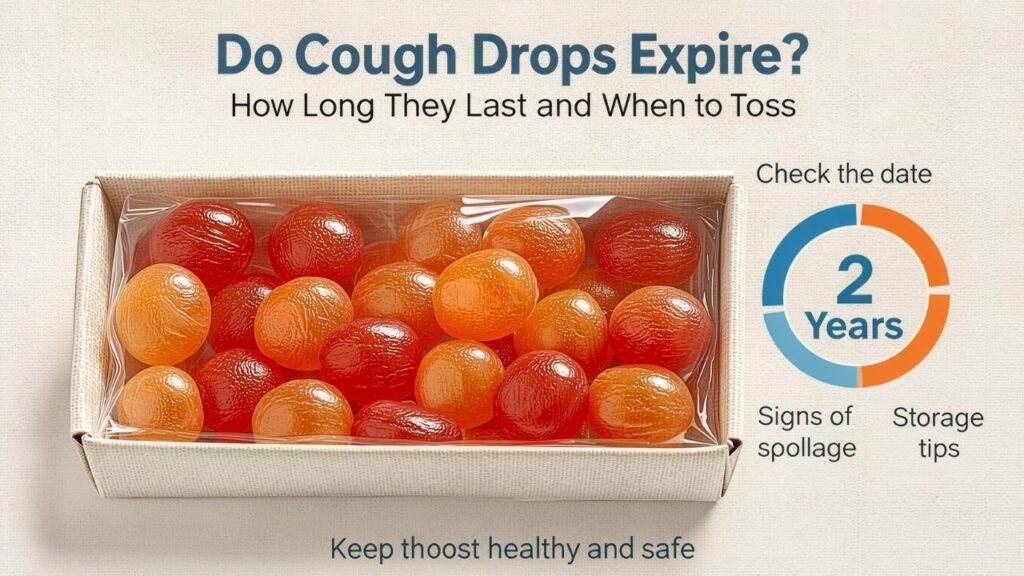
Cough drops do expire, and for many products the date is there because the active ingredients and the full product quality were tested only through that period. The FDA explains that expiration dates on drug products are based on stability testing designed to show the medicine will keep meeting standards for strength, quality, and purity during its shelf life. Once that date passes, that assurance ends.
That does not always mean an expired drop becomes dangerous the next day. In many cases, what people notice first is weaker flavor, a stale smell, stickiness, hardening, crumbling, or drops that have fused together in the wrapper. Those changes make sense because official labels for throat and cough lozenges commonly say to store them at room temperature, in a dry place, and away from excess heat or moisture. Some products also warn not to use them if the seal or outer wrap is broken.
Why expiration dates matter for cough drops
A lot of people think of cough drops as candy with a medicated feel. Some do look and taste candy-like, but many are labeled drug products. DailyMed listings show common active ingredients such as menthol, pectin, and in some products benzocaine plus menthol. Those ingredients are meant to give temporary symptom relief, so the date on the package is tied to how well the product is expected to hold up over time.
Menthol lozenges are used to soothe a tickle in the throat and temporarily relieve cough or throat irritation. Pectin lozenges act as oral demulcents, which means they coat and soothe irritated throat tissue. Since the point of using them is symptom relief, reduced potency or poor storage can make an old product less useful when you actually need it.
What happens when cough drops get old?
Most expired cough drops do not become toxic in the dramatic way people imagine. What usually changes first is performance and product condition. The active ingredient may no longer be at its best level, and the drop itself may absorb moisture, turn sticky, get grainy, or lose its smooth finish. FDA consumer guidance says using expired medicines is risky because they may not work as intended and can have changes in chemical composition over time.
For a basic sore throat, a weaker drop may simply feel disappointing. For someone who is relying on it during a long meeting, a bad cough spell, or travel, that weak relief can be frustrating. It is less about panic and more about reliability. If you expect a product to soothe cough and throat irritation, you want one that is still within date and stored the right way.
Image placement: infographic showing “Keep or Toss?” with boxes for expiration date, wrapper condition, heat exposure, stickiness, and discoloration.
Texture and taste changes you may notice
Old cough drops often tell on themselves. You might notice:
- wrappers that feel tacky or damp
- drops stuck to the paper or plastic
- a cloudy or faded surface
- cracks, crumbles, or sugar bloom
- a weaker smell or strange aftertaste
- several drops melted together in the bag
These changes are not random. Official lozenge labels repeatedly mention protection from moisture, heat, sunlight, and damaged seals, which points to the conditions that affect freshness and stability.
Does unopened mean it lasts forever?
No. Even sealed cough drops still age. Sealed packaging helps a lot because it slows exposure to air and humidity, but the expiration date still applies. Stability testing supports the labeled date, not unlimited storage. So a factory-sealed bag is better than a half-open sleeve rolling around in your car, but it is not a pass to keep it forever.
How storage affects shelf life
Storage can make the difference between a pack that still seems fine near its date and one that turns into a sticky lump long before then. Cough drop labels commonly say to store at room temperature, keep them in a dry place, and protect them from heat, sunlight, or moisture. Some resealable bags even tell users to close the bag to maintain freshness.
That means the medicine cabinet is not always the best spot if your bathroom gets steamy. A car glove box is usually worse, especially in hot weather. Heat and humidity do not just affect taste. They can change the shape, wrapper integrity, and overall quality of the drop, which is why labels mention those storage limits so often.
Best places to store cough drops
If you want cough drops to last as long as the package intends, store them in places like:
- a bedroom drawer
- a pantry shelf away from the stove
- a desk drawer in a climate-controlled room
- a travel pouch kept indoors
- a first-aid kit stored in a cool, dry closet
These choices line up with label directions that call for room temperature and dry storage.
Places that shorten their life
Try not to leave them in:
- hot cars
- bathroom cabinets with frequent steam
- windowsills with direct sun
- gym bags that sit in heat
- coat pockets through summer
- bags where wrappers get crushed or torn
If the packaging is damaged, some products specifically say not to use them.
How to tell whether an old pack is still worth using
When you find an older pack, check it the same way you would check any over the counter product. Start with the printed expiration date. If it is past date, the safest move is replacement. FDA advice for consumers is clear on sticking to the expiration date on medicine labels.
Next, inspect the package itself. If the outer wrap is open, missing, torn, or looks damp, skip it. Several official labels tell users not to use lozenges when packaging seals are broken or when the wrap is missing.
Then look at the drop. Toss it if you see melting, cracking, unusual discoloration, crystals, moisture damage, or a strong stale smell. Even if the drop is technically within date, poor storage can make it unpleasant or less dependable. That last point is an inference drawn from the storage warnings and seal instructions on official labeling, and it matches what many people notice in real life when lozenges sit in bad conditions.
Are expired cough drops unsafe?
In many everyday cases, expired cough drops are more of a quality and effectiveness problem than an emergency. That said, FDA consumer guidance still advises against using expired medicines because they may not work as intended and may change over time. That is a stronger warning than many people expect for something as ordinary as a cough drop.
The bigger safety issue may be using cough drops when your symptoms need more than a lozenge. Some throat drop labels warn that a severe sore throat, or one that lasts more than two days or comes with fever, headache, rash, swelling, nausea, or vomiting, needs prompt medical advice. So even a fresh cough drop is for temporary relief, not for brushing off a more serious problem.
Children and swallowing concerns
Cough drops are not the same for every age group. Directions vary by product. Some menthol drops say to ask a doctor before using in children under 2, while some pectin drops say under 3, and other lozenges may have different cutoffs. That is one more reason to check the actual label instead of treating all cough drops the same.
There is also a practical issue with young children and anyone who has trouble swallowing. A lozenge that is supposed to dissolve slowly in the mouth can be a choking risk if used the wrong way, and a melted or broken drop may be even less predictable. Safe use starts with the package directions.
Image placement: medicine organizer or kitchen shelf showing proper cough drop storage in a cool, dry place.
Should you throw them away right after the date?
From a best-practice point of view, yes, replacing them after the expiration date is the smart move. Cough drops are usually inexpensive, and using an in-date pack removes doubt about strength, storage, and freshness. When relief products cost relatively little, there is not much upside in gambling on an old, stale pack.
That said, many people want a plainspoken answer. If you accidentally used one expired cough drop and it tasted normal, that does not automatically mean something bad will happen. The more realistic concern is that it may not soothe your throat or cough as well as a fresh product. If the drop tastes strange, looks damaged, or came from a torn or heat-exposed package, toss the rest.
A simple toss-or-keep checklist
Keep it only if all of these are true:
- it is still within the printed date
- the wrapper or seal is intact
- the drop looks normal
- it smells and tastes normal
- it was stored in a cool, dry place
- it has not melted, hardened badly, or stuck to the wrapper
Toss it if any of these apply:
- expired date
- broken seal
- missing outer wrap
- moisture damage
- unusual color or smell
- stored in a hot car or steamy bathroom
- you are not sure how long it has been there
That checklist lines up with FDA expiration guidance and the storage and packaging warnings found on cough and throat lozenge labels.
Buying and replacing cough drops the smart way
The easiest fix is to treat cough drops like other over the counter basics. Buy a reasonable amount, check the date before storing them, and rotate your supply once or twice a year. If you keep them in several places, such as a car, purse, office drawer, and home cabinet, label the newest pack for daily use and move older packs forward so nothing sits forgotten for years.
It also helps to buy the format you actually use. If you only reach for cough drops during winter colds, a huge bag may not make sense. A smaller pack is more likely to be used before the date. If you rely on them often for dry office air, public speaking, or travel, keep a fresh pack handy and replace worn extras before cold season starts.
Not all cough drops are identical
Some products are cough suppressants and oral anesthetics with menthol. Some are throat-soothing drops with pectin. Others combine ingredients such as menthol and benzocaine. Since product directions, age cutoffs, storage needs, and intended uses can differ, reading the specific label matters more than assuming every drop in the aisle works the same way.
That difference also affects expectations. A pectin throat drop may feel soothing but is not the same product type as a menthol cough suppressant. So when someone asks whether old cough drops still “work,” the real answer depends on which product they have, how it was stored, and whether the active ingredient is still likely to perform as intended.
FAQ
Do cough drops expire if unopened?
Yes. Unopened packaging helps protect the product, but the expiration date still applies because shelf life is based on stability testing through a specific period, not forever.
Do cough drops expire in a hot car faster?
Heat can damage quality faster, and many official labels tell users to store lozenges at room temperature and protect them from heat, sunlight, or moisture. A hot car is one of the worst places to leave them.
Can expired cough drops make you sick?
They are more likely to be less effective or stale than to cause sudden illness, but FDA advice is still to avoid expired medicines. If the package is damaged or the drop looks or smells off, throw it out.
How long do cough drops usually last?
The best guide is the printed expiration date on the bag, box, or wrapper. Shelf life varies by maker and formulation, so there is no single number that fits every product.
Can you use cough drops after the expiration date in an emergency?
FDA consumer guidance says to stick to expiration dates on medicines. In real life, one old drop may not cause a dramatic problem, but it may not work well, and replacing it is the safer call.
What is the best way to store cough drops?
Keep them in a cool, dry place at room temperature, away from sunlight, steam, and excess heat. Leave them in their original packaging with the seal intact.
Are throat lozenges and cough drops the same thing?
Not always. Some lozenges use menthol to suppress cough and numb irritation, while others use pectin to coat and soothe the throat. The label tells you which type you have.
When should you see a doctor instead of using cough drops?
If your sore throat is severe, lasts more than two days, or comes with symptoms such as fever, rash, swelling, nausea, vomiting, or headache, product labels say to get medical advice promptly.
Conclusion
So, do cough drops expire? Yes, they do, and the safest habit is simple: check the date, inspect the wrapper, think about where they were stored, and replace them when there is any doubt. Fresh cough drops are cheap, easy to swap out, and much more likely to give the relief you expected when your throat starts acting up.
If you want, I can also turn this into a fully formatted WordPress-ready version with tighter paragraph spacing and image captions.