Introduction
Have you ever accidentally smelled ammonia and instantly recoiled from the intense, pungent odor? If so, you’re not alone. Many people have experienced this strong, unmistakable scent, but what exactly does ammonia smell like?
Ammonia’s odor is not something most of us forget easily. Whether you’ve encountered it in a cleaning product, a spilled bottle, or even in natural environments like animal waste, its sharp, unpleasant smell can linger in the air. But what is it about this particular scent that makes it so memorable—and, in many cases, unpleasant? Let’s dive into the characteristics of ammonia’s smell, its chemical properties, and how it affects our senses.
What is Ammonia?
Ammonia (NH₃) is a colorless, nitrogen-based compound that has a strong, distinct odor. It’s often found in household cleaning products, fertilizers, and even in natural occurrences like animal urine. While the odor of ammonia might be familiar, understanding why it smells so strong and sharp requires a closer look at its chemical structure and natural uses.
The Chemical Composition of Ammonia
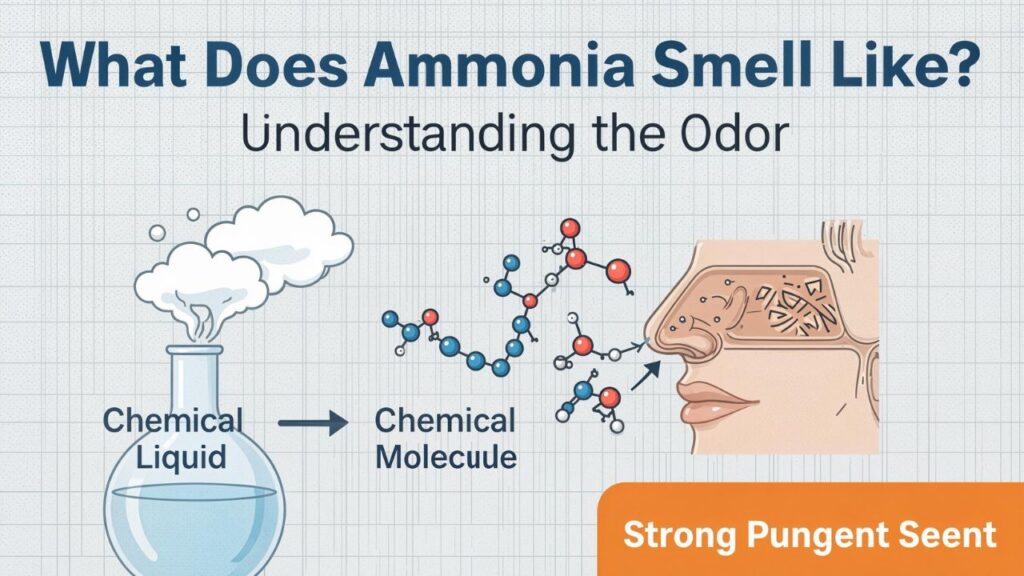
Ammonia is composed of one nitrogen atom and three hydrogen atoms, making it a highly reactive molecule. This reactivity is what gives ammonia its powerful scent. When ammonia molecules are released into the air, they easily bond with water vapor in the atmosphere and the moist membranes in our noses, intensifying the smell and creating a sensation that is both sharp and caustic.
How Does Ammonia Affect the Nose?
The intensity of ammonia’s smell comes from how it interacts with the olfactory receptors in our nose. When we breathe in ammonia, it triggers a strong reaction from the receptors, sending signals to the brain that register as discomfort or irritation. This is why the scent of ammonia can be so overwhelming, especially in high concentrations.
Characteristics of Ammonia’s Odor
Sharp and Pungent
The most common way people describe the smell of ammonia is as sharp, pungent, and similar to the smell of urine or bleach. This comparison makes sense because ammonia is a key component of urine, particularly in animals like cats. The sharpness comes from its molecular structure, which makes ammonia highly volatile and easily detectable by our noses, even at very low concentrations.
The “Burning” Sensation
In addition to its strong smell, ammonia is also known for its irritating properties. Inhaling ammonia vapors can cause a burning sensation in the nose and throat, leading to coughing and discomfort. In fact, exposure to high levels of ammonia can be harmful, which is why it’s important to use ammonia-based products in well-ventilated areas.
Comparing Ammonia with Other Smells
While ammonia’s smell is distinctly sharp and intense, it’s often compared to the odor of bleach. Bleach contains a form of chlorine, which also creates a strong, biting scent. However, while bleach has a somewhat chemical smell, ammonia tends to have a more natural, biological undertone due to its presence in urine and other biological processes.
Why is Ammonia Smell So Powerful?
The Role of Ammonia in Nature
Ammonia occurs naturally in the environment, especially in areas where decomposition takes place. Animal urine, decaying plants, and other biological processes release ammonia into the air, making it an omnipresent smell in many outdoor settings. The sharp odor likely evolved as a defense mechanism, warning animals to stay away from potential threats or harmful environments.
Industrial Uses and Ammonia Exposure
In addition to its biological occurrence, ammonia is widely used in various industries. It is a critical ingredient in fertilizers, which can also explain its presence in agricultural settings. Ammonia is also used in refrigeration systems, which is why you may encounter its odor in industrial settings or even in some food production facilities.
The Link Between Ammonia and Human Health
While ammonia itself is not typically dangerous in small amounts, prolonged or intense exposure can have serious health effects. Breathing in high concentrations of ammonia can irritate the respiratory system, causing coughing, wheezing, and even permanent lung damage in extreme cases. This is one reason why its smell is so unpleasant—it serves as a natural warning signal to protect our bodies from harm.
Frequently Asked Questions
What is the smell of ammonia similar to?
Ammonia’s smell is often compared to the smell of urine or bleach. It has a sharp, pungent odor that can be unpleasant and irritating.
Why does ammonia smell so strong?
Ammonia smells strong because it’s highly volatile and easily detectable in low concentrations. It reacts quickly with the moisture in the air and our noses, creating an intense and pungent odor.
Is ammonia dangerous to breathe in?
Yes, ammonia can be dangerous to breathe in, especially in high concentrations. It can irritate the eyes, nose, throat, and respiratory system, and prolonged exposure can cause permanent lung damage.
Can ammonia smell be removed?
Ammonia’s strong smell can be neutralized by using ventilation, air purifiers, or odor neutralizers. It can also be diluted with water to reduce its intensity.
What does ammonia smell like in high concentrations?
In high concentrations, ammonia’s smell can be overwhelmingly sharp, almost chemical-like. It can also cause a burning sensation in the nose, eyes, and throat.
How does ammonia affect animals?
Ammonia is often used as a warning signal in animals’ urine, helping them mark their territory. However, in high concentrations, ammonia can be harmful to animals as well, causing respiratory distress.
Conclusion
In conclusion, the question of what does ammonia smell like is not just about describing a scent but also understanding the various contexts in which it occurs. Whether you encounter it in everyday cleaning products, industrial environments, or even nature, ammonia’s sharp, pungent smell is something you won’t forget easily. Understanding the characteristics and causes of this powerful odor helps us appreciate its role in both nature and industry. So, the next time you encounter ammonia, you’ll know exactly why it smells the way it does—and how to deal with it safely.