Introduction
It starts so lightly that you almost question whether it is real. A tiny flutter under the lash line, a quick jump in the lid, then another a few minutes later. If you have been searching for left eye twitching for female, you are probably wondering whether it is just stress, a sign of fatigue, or something you should take more seriously.
In most cases, a twitching eyelid is a common form of eyelid spasm called myokymia. It is usually temporary and is often linked with stress, tiredness, caffeine, eye strain, or surface irritation rather than a dangerous illness. NHS guidance also notes that twitches are common and are very rarely a sign of anything serious.
For women, the question can feel more personal because daily life often piles several triggers together at once: long screen hours, poor sleep, dry indoor air, contact lenses, makeup, anxiety, and not enough downtime. Dry eye also matters here, since the American Academy of Ophthalmology notes that dry eye is more common in women, especially after menopause.
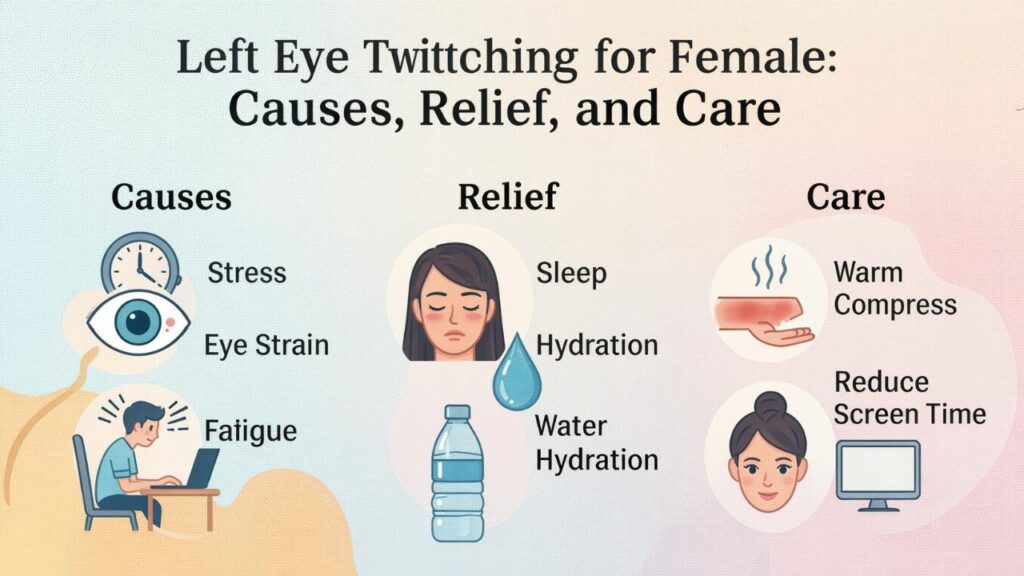
Why left eye twitching for female happens more often than you might expect
A minor eyelid twitch usually comes from a small muscle spasm in the lid, not from the eyeball itself. Mayo Clinic explains that the most common type, eyelid myokymia, often affects only one eye at a time and can range from barely noticeable to annoying. That is why a twitch in the left eye can still fall into the same harmless pattern doctors see every day.
The side matters less than the overall pattern. In everyday practice, left versus right usually does not change the likely explanation. What matters more is how long the twitch lasts, whether your entire eyelid snaps shut, and whether other facial muscles start twitching too. Those details help separate a passing annoyance from something that deserves a checkup.
Common causes of left eye twitching for female
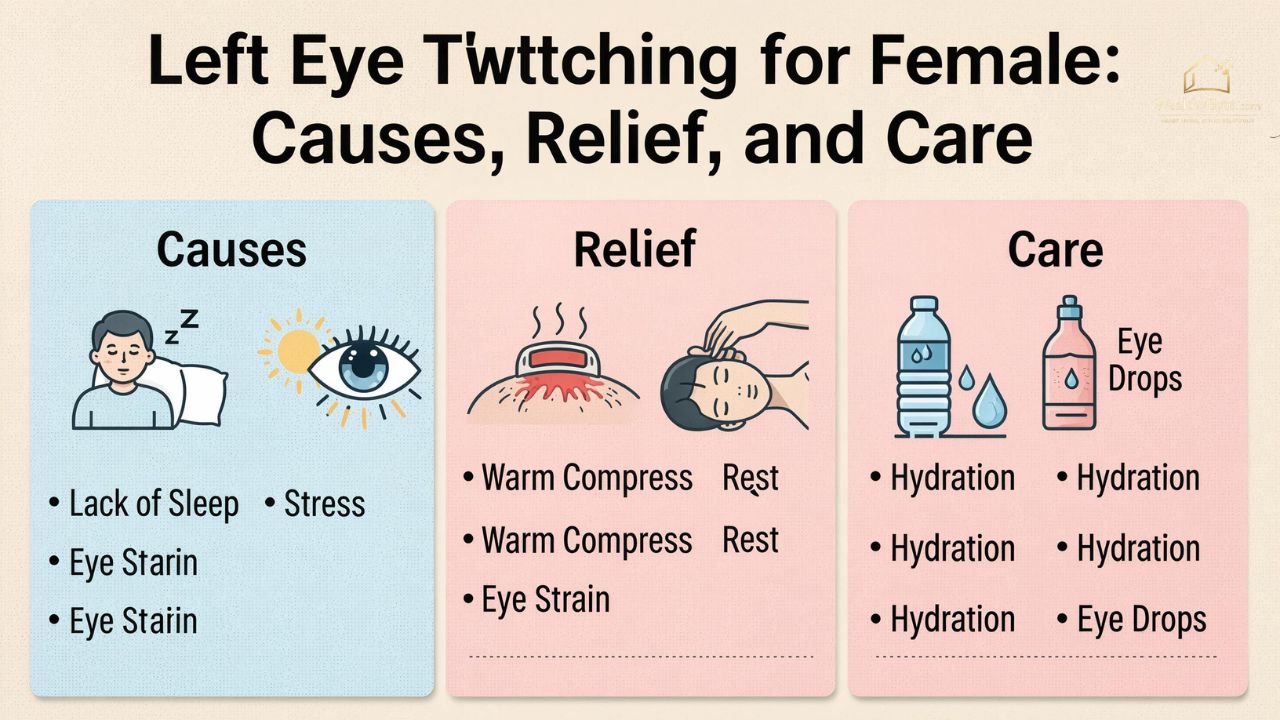
Stress and anxiety
Stress is one of the most common reasons eyelid twitching shows up out of nowhere. Both the NHS and the American Academy of Ophthalmology connect eye twitching with stress, and many people notice the flutter gets worse during mentally heavy days, emotional pressure, or periods of poor recovery.
This is one reason the twitch may seem stronger at night, during deadlines, after arguments, or when you are already running on low energy. The body is tense, the blink reflex gets irritated more easily, and a tiny muscle in the lid starts acting up.
Poor sleep and exhaustion
Fatigue is another classic trigger. Mayo Clinic lists fatigue among the most common causes of eyelid myokymia, and the CDC says most adults need at least 7 hours of sleep each night, with 7 or more hours recommended for adults age 18 to 60.
When sleep gets cut short for several nights in a row, the nervous system becomes more reactive. That does not mean lack of sleep is damaging your eye in a permanent way. It usually means your body is asking for rest in one of the most annoying ways possible.
Caffeine, nicotine, alcohol, and stimulation
If your day runs on strong tea, coffee, energy drinks, or nicotine, your eyelid may be reacting to the extra stimulation. Mayo Clinic lists caffeine excess, alcohol intake, and nicotine among the common triggers for eyelid twitching. The NHS also advises cutting back on heavy caffeine and alcohol intake when a twitch is hanging around.
A lot of women notice the pattern after trying to push through tiredness with more caffeine. That can turn into a cycle: you are tired, you drink more coffee, the lid twitches, you sleep worse, and the twitch keeps going.
Dry eye, eye irritation, and screen strain
Dry or irritated eyes can be a big piece of the puzzle. Mayo Clinic includes irritation of the eye surface or inner eyelids as a common trigger, and the American Academy of Ophthalmology says dry eye is more common in women. Looking at screens for long stretches can also make your eyes feel dry because people tend to blink less during screen use.
That is one reason left eye twitching for female often shows up after a day of laptop work, scrolling in bed, wearing contacts too long, or sitting in air conditioning. If the eye also feels gritty, watery, burning, or tired, dryness may be feeding the twitch.
Does it mean something different because it is the left eye?
From a medical point of view, a mild twitch in the left eye is usually not interpreted differently from the same twitch in the right eye. The common form of eyelid myokymia often affects just one eye at a time, and common triggers stay the same either way.
Many people grow up hearing cultural beliefs about the left eye carrying a special meaning. Those beliefs can be emotionally powerful, but they are not how doctors evaluate eyelid twitching. Clinically, the pattern of symptoms matters more than the side.
Female-specific factors worth paying attention to
Dry eye and hormonal changes
Women are more likely to deal with dry eye, and that becomes more common after menopause. Since surface irritation can trigger twitching, dry eye can make a harmless eyelid spasm more likely to show up or linger.
This does not mean hormones directly cause every twitch. It means hormone-related dry eye may set the stage for irritation, blinking changes, and twitching in some women.
Makeup, lash products, and contact lenses
Mascara, eyeliner, lash glue, makeup remover, and contact lenses can sometimes leave the eyes irritated or dry. The American Academy of Ophthalmology notes that makeup flakes can get into the tear film and irritate the eyes, and NHS and hospital guidance also warn that contact lens wear can be linked with red, painful, or irritated eyes.
If the twitch tends to happen after makeup, contact lens wear, or late-night product use, try simplifying your routine for a few days. Clean brushes, replace old eye makeup, and avoid wearing contacts when your eyes already feel irritated.
Life load and poor recovery
A lot of women are dealing with paid work, family responsibilities, mental load, hormonal shifts, and broken sleep all at once. That mix can raise stress, shorten sleep, increase caffeine use, and reduce recovery time. In other words, several of the most common twitch triggers often arrive as a bundle, not one at a time.
What a harmless eyelid twitch usually feels like
A routine eyelid twitch is often a light, repetitive flutter in the upper or lower lid. It may come and go over a few hours, pop up several times a day, then disappear for days before returning. Mayo Clinic notes that the common form can be barely noticeable or mildly irritating, and it often clears within a short time even if it returns off and on.
Most of the time, there is no major pain, no loss of vision, and no weakness in the rest of the face. You may notice it more when you are reading, working on a screen, driving, or lying in bed at night. That pattern fits the everyday version far more than a serious nerve disorder.
Habits that can help prevent repeat episodes
If you get this often, prevention matters more than chasing a quick fix each time. Try to notice your pattern for one or two weeks. Ask yourself whether the twitch appears after a short night of sleep, after three coffees, during a stressful stretch, after a long work session, or while your eyes feel dry and gritty. Patterns often tell the story more clearly than a single episode.
Simple habits can lower the odds of another flare:
- keep a steadier sleep schedule instead of trying to catch up only on weekends
- lower screen strain by taking regular visual breaks and sitting at a comfortable screen distance
- keep indoor air from getting too dry when possible
- blink more often during focused work
- be selective with eye makeup and replace old products
- stay alert to products that sting, burn, or leave your eyes watery afterward
- review medicine side effects with a clinician or pharmacist before assuming a drug is the cause
When left eye twitching for female keeps returning, the goal is not perfection. It is simply reducing the stack of triggers that pushes the eyelid over the edge.
How to calm the twitch at home
Most mild cases get better without treatment. Mayo Clinic says eye twitching often goes away within a few days or weeks with rest, stress relief, and less caffeine.
A practical home plan looks like this:
- sleep for at least 7 hours if you can, and aim for a few steadier nights in a row
- cut back on caffeine for several days instead of adding more to fight fatigue
- use screen breaks; the National Eye Institute recommends the 20-20-20 rule: every 20 minutes, look 20 feet away for 20 seconds
- blink fully when using screens and consider lubricating eye drops if your eyes feel dry; the American Academy of Ophthalmology advises artificial tears for screen-related dryness
- take a short break from contacts or eye makeup if irritation may be part of the problem
- do not panic-check the twitch every few minutes; worry can make you notice it more and feel like it is getting worse
When left eye twitching for female should not be ignored
Most eyelid twitches are harmless. Still, some patterns deserve medical advice. Mayo Clinic recommends seeing a healthcare professional if the twitch does not go away within a few weeks, if the eyelid closes completely with each twitch, if you have trouble opening the eye, if twitching spreads to other parts of the face or body, or if the eye is red, swollen, has discharge, or the lids are drooping. The NHS advises seeing a GP if a twitch lasts more than 2 weeks, affects more than one place, or the area feels weak or stiff.
Pay attention to these warning signs:
- the twitch lasts beyond 2 to 3 weeks
- the whole eyelid squeezes shut
- twitching spreads into the cheek, mouth, or other side of the face
- you also have drooping, swelling, redness, or discharge
- vision is affected
- the muscles feel weak, stiff, or hard to control
If the twitch comes with facial weakness, worsening drooping, or trouble opening the eye, get medical help promptly.
Conditions a doctor may consider if the twitch keeps going
Benign essential blepharospasm
This is not the same as the minor twitch most people get. MedlinePlus explains that benign essential blepharospasm causes abnormal blinking or eyelid spasms and is different from the common temporary eyelid twitch linked with fatigue, stress, or caffeine. It often involves both eyes rather than a small flutter in one lid.
Hemifacial spasm
Hemifacial spasm is a nervous system condition that usually starts around one eye and may spread to the cheek or mouth on the same side of the face. Mayo Clinic says it often happens because a blood vessel is pressing on the facial nerve. This pattern is more serious than a simple eyelid twitch, especially when the movement spreads beyond the lid.
Medicine effects or another underlying issue
The NHS notes that some medicines can be linked with twitching, and a clinician may review possible causes if the twitch does not settle. In persistent cases, a doctor may look at eye surface irritation, dry eye, nerve-related causes, or other movement disorders depending on the full symptom picture.
What to expect if you see a doctor
If the twitch keeps coming back or starts to interfere with daily life, a doctor will usually begin with the basics. They may ask how long it has been happening, whether it is always the same eye, whether your whole lid shuts, what medicines you take, how much caffeine you use, and whether the twitch spreads into the cheek or mouth. NHS guidance notes that if a twitch does not go away, a clinician may check for causes like stress or medicines and may refer you to a neurologist if needed.
The exam may include looking at the eye surface for dryness or irritation, checking the eyelid itself, and watching for movement in other facial muscles. If the pattern suggests hemifacial spasm or another nerve-related issue, imaging such as MRI may be considered. Mayo Clinic notes that diagnostic testing for hemifacial spasm can include MRI and MRA.
Treatment depends on the cause. For a simple twitch, that may mean no procedure at all, just better sleep, less caffeine, and relief for dry eye. For blepharospasm or hemifacial spasm, botulinum toxin injections are commonly used to calm the overactive muscles. Mayo Clinic says onabotulinumtoxinA is the most common treatment for hemifacial spasm and controls symptoms in most people, while NHS sources describe botulinum toxin as an effective treatment for eyelid spasm as well.
FAQ
Is left eye twitching for female usually serious?
Usually, no. Most eyelid twitches are brief and linked to stress, fatigue, caffeine, or irritation. They often settle on their own within days or weeks.
Can stress alone cause a twitch in one eye?
Yes. Stress is one of the most common triggers mentioned by the NHS, Mayo Clinic, and the American Academy of Ophthalmology.
Why does the twitch feel worse at night?
It may stand out more when you are tired, quiet, and paying attention to it. Fatigue is a well-known trigger, and stress plus screen time often build up by evening.
Can dry eye make left eye twitching for female worse?
Yes. Eye surface irritation is a known trigger, and dry eye is more common in women, especially after menopause.
Should I worry if only my left eye is twitching?
Not usually. The most common kind of eyelid twitch often affects only one eye at a time. The bigger concern is not the side, but whether the twitch lasts, spreads, or affects vision.
What can I do right away to stop it?
Sleep better, cut back on caffeine, take screen breaks, and use artificial tears if your eyes feel dry. Those steps match the most common triggers and self-care advice from major medical sources.
When should I see a doctor for left eye twitching for female?
Book an appointment if it lasts more than 2 weeks, your eyelid closes completely, the eye becomes red or swollen, your lids droop, or the twitch spreads into other facial muscles.
Can a twitch mean a nerve problem?
Sometimes, but not usually. A simple eyelid twitch is common and often harmless. A nerve-related condition becomes more likely when the twitch spreads to one side of the face or does not go away.
Conclusion
In most cases, left eye twitching for female is more annoying than dangerous. It is usually the body’s way of waving a small flag that says you are stressed, tired, overstimulated, or dealing with dry, irritated eyes. The good news is that the common version often settles with better sleep, less caffeine, lighter screen strain, and a little patience.
If left eye twitching for female lingers, spreads, or comes with redness, drooping, discharge, weakness, or trouble opening the eye, do not brush it off. That is the moment to get it checked and make sure you are dealing with a simple lid twitch and not something that needs proper treatment.