Getting a painful boil can feel like your body is trying to tell you something important. Many people search what is your body lacking when you get boils because they assume a boil must mean a missing vitamin or mineral.
That idea is understandable, but the real answer is a little more layered. A boil is usually a bacterial infection of a hair follicle, most often linked to Staphylococcus aureus, not a simple sign that your body lacks one specific nutrient. Still, repeated boils can sometimes point to deeper issues such as blood sugar problems, skin friction, smoking, immune problems, iron deficiency, or a chronic skin condition that looks like boils.
So if you are wondering what is your body lacking when you get boils, the better question is this: are you dealing with an infection, a skin barrier problem, an underlying health issue, or a nutrition gap that is making healing harder? Once you frame it that way, the picture becomes much clearer.
What is your body lacking when you get boils?
In most cases, the body is not lacking one magic nutrient. Boils usually start when bacteria enter a hair follicle or nearby oil gland and trigger a localized skin infection. Staph bacteria can live on the skin or in the nose without causing trouble, then take advantage of a small break in the skin, friction, shaving, sweating, or another skin problem.
That is why a single boil after shaving, sweating, tight clothing, or skin irritation does not usually mean you are low in vitamins. It usually means bacteria found an opening and your skin reacted. This matters because people often spend money on supplements while missing the more likely trigger right in front of them.
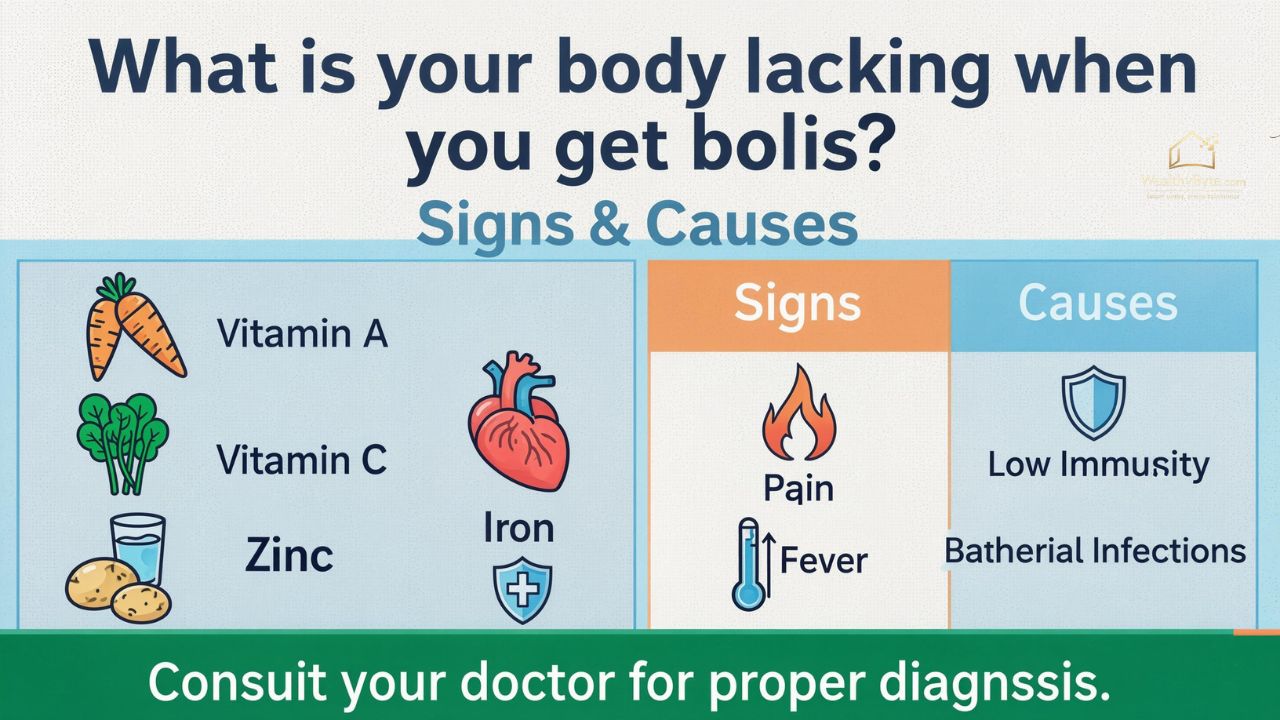
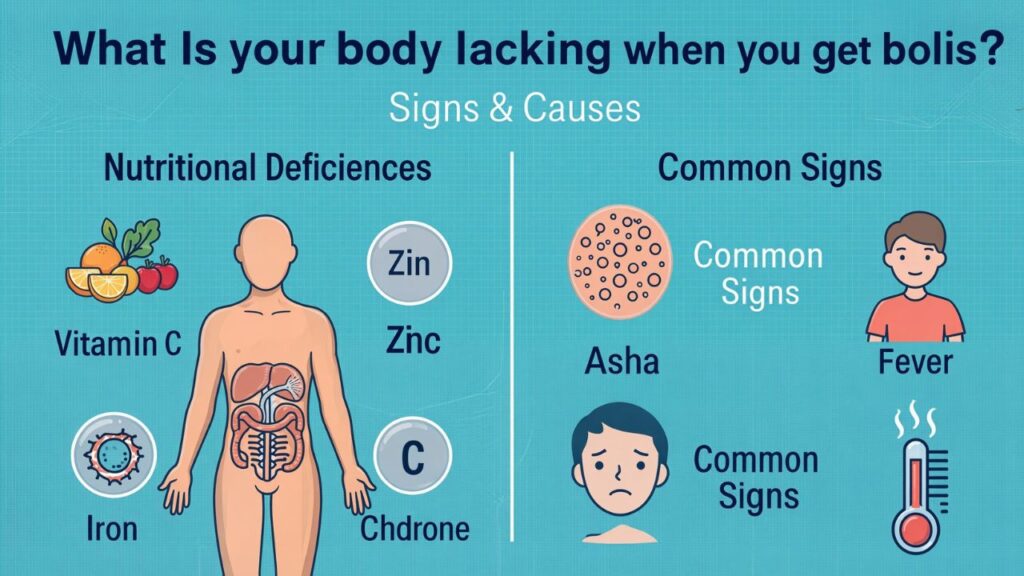
At the same time, the question what is your body lacking when you get boils does have a partial nutrition angle. While deficiencies do not usually create boils on their own, poor nutrition can weaken skin repair and immune function, making infections harder to fight and slower to heal. Protein, iron, zinc, and vitamins A and C all play a part in wound healing and tissue repair.
So the honest answer is this: boils are usually caused by infection, but repeated boils may be more common when your body is run down, your blood sugar is poorly controlled, your skin barrier is damaged, or your healing capacity is not at its best.
The real causes people often miss
Bacterial infection is the usual starting point
A boil, also called a furuncle, is a deep infection of a hair follicle. If several boils join together, the larger cluster is called a carbuncle. These often become red, swollen, painful, and filled with pus.
The bacteria behind many boils are Staphylococcus aureus. Some people carry these bacteria on their skin or in their nose with no symptoms at all, which is one reason boils can keep coming back in certain people or households.
Friction, sweat, and tiny skin injuries can set the stage
Skin does a lot of silent work to keep germs out. When that barrier gets rubbed, nicked, shaved, scratched, or inflamed, bacteria have an easier path inside. That is why boils often show up on the face, neck, armpits, buttocks, thighs, and groin.
Tight clothing, heavy sweating, repeated shaving, and skin-to-skin rubbing can all increase the chance of the same area becoming inflamed again. If your boils keep appearing where the skin rubs together, it is worth looking at irritation patterns, not just your diet.
Some health conditions raise the odds
Certain underlying issues make boils more likely or more likely to recur. Mayo Clinic lists diabetes, close contact with someone who has a staph infection, and skin conditions that damage the protective barrier, such as acne or eczema, among the known risk factors.
Research and dermatology references also note higher recurrence in people with obesity and smoking, and DermNet notes that some people with boils may have anemia, iron deficiency, diabetes, or immune deficiency in the background. That does not mean every person with boils has these problems, but recurring boils are a good reason not to guess.
What nutrient gaps may play a role
Iron deficiency
If you keep asking what is your body lacking when you get boils, iron is one of the better-known possibilities to discuss with a clinician. Iron supports normal immune function and oxygen delivery, and dermatology references list anemia and iron deficiency among the conditions sometimes linked with recurrent boils.
This does not mean you should start iron tablets on your own. Iron deficiency needs the right diagnosis because low iron can come from poor intake, heavy periods, blood loss, gut issues, or chronic disease. Too much iron can also be harmful.
Zinc deficiency
Zinc is closely tied to immune response and skin repair. Cleveland Clinic notes that zinc deficiency can lead to rashes or skin lesions, and zinc is one of the nutrients that supports wound healing. That makes zinc relevant when skin infections keep healing slowly, even though it is not a proven one-cause answer for most boils.
People with restricted diets, digestive disorders, or absorption problems are more likely to run low in zinc. In those settings, correcting a deficiency may support healthier skin recovery overall.
Protein, vitamin A, and vitamin C
Healthy skin repair depends on enough building material. Cleveland Clinic notes that protein, iron, zinc, and vitamins A and C all help wounds heal well. So when nutrition is poor, your body may not create or repair tissue as smoothly after infection or inflammation.
That is why the phrase what is your body lacking when you get boils can sometimes point less to one vitamin pill and more to the bigger picture of under-eating, poor food quality, crash dieting, or a health condition that affects absorption. The body heals best when it has enough protein, micronutrients, sleep, and stable blood sugar.
What is your body lacking when you get boils if they keep coming back?
Recurrent boils deserve a wider lens. In many cases, what keeps coming back is not a missing nutrient but the same risk pattern: staph carriage, repeated friction, diabetes, smoking, obesity, eczema, or another condition that keeps breaking down the skin barrier. Around one in ten patients in one primary care study developed another boil or abscess within a year, and repeat cases were associated with obesity, diabetes, smoking, younger age, and prior antibiotic use.
Recurring boils can also be a sign that the lesions are not ordinary boils at all. Hidradenitis suppurativa is a chronic inflammatory condition that causes painful recurring boil-like lumps, especially in areas where skin rubs together such as the armpits, groin, buttocks, and under the breasts. It often gets mistaken for repeated boils, especially early on.
If you repeatedly get painful lumps in the same body folds, notice drainage, scarring, tunnels under the skin, or blackheads in the same areas, it is smart to ask a dermatologist whether this could be hidradenitis suppurativa instead of simple boils.
Signs your boils may be linked to an underlying issue
You should think beyond home care if boils are becoming a pattern instead of a one-off event. A pattern may look like:
- boils that keep coming back in the same spot
- several boils at once
- a boil that lasts more than two weeks
- fever, spreading redness, or feeling generally unwell
- boils on the face, near the eyes, or along the spine
- boils along with diabetes or a weakened immune system
- recurring painful lumps in the armpits, groin, or under the breasts
When those red flags show up, a clinician may look for diabetes, anemia, iron deficiency, immune problems, bacterial carriage, or a chronic skin disorder. The point is not to panic. The point is to stop guessing and get the right reason.
When the question points to healing rather than the first cause
Sometimes what is your body lacking when you get boils is really a question about why your skin is not bouncing back well. Infection starts the problem, but healing decides how long it stays angry, painful, and easy to trigger again. People who are not eating enough, are under severe stress, are sleeping poorly, or have medical issues that affect nutrient absorption may notice that even small skin problems linger longer than expected. Poor healing does not prove a deficiency, but it is a clue worth paying attention to.
This is one reason self-diagnosis can get messy. A person may blame zinc when the real issue is uncontrolled diabetes. Another may assume low iron when the lumps are actually hidradenitis suppurativa. Someone else may buy several supplements even though the larger problem is frequent friction, shaving irritation, or sharing razors and towels in a household where staph spreads easily.
Foods and habits that support skin recovery
If your diet has been poor, it makes sense to improve the basics while you sort out the cause. Skin recovery needs protein for rebuilding tissue, iron for oxygen transport, zinc for repair, and vitamins A and C for normal healing. That does not mean food replaces treatment for an infected boil. It means good nutrition gives your body better support while the infection settles and the skin closes.
A practical food pattern for skin healing can include eggs, yogurt, beans, lentils, fish, chicken, meat, citrus fruit, berries, leafy greens, carrots, sweet potatoes, nuts, seeds, and other varied whole foods. The goal is not a trendy cleanse. The goal is steady nourishment that helps your skin do its repair work.
You may also want to think about habits that quietly work against healing:
- under-eating protein
- smoking
- staying in sweaty clothes for long periods
- repeated shaving over irritated skin
- poor sleep
- ignoring recurring blood sugar symptoms such as thirst, fatigue, or frequent urination
These are not glamorous answers, but they are often more useful than chasing a single missing vitamin.
When doctors start looking for an underlying reason
If boils are frequent, severe, or unusually stubborn, a clinician may widen the workup. That can include looking for diabetes, iron deficiency or anemia, inflammatory disease, immune deficiency, or bacterial causes such as recurrent staph carriage. Guidelines and dermatology references repeatedly make the point that recurrent abscesses should not always be brushed off as random bad luck.
That is why what is your body lacking when you get boils sometimes leads to a lab test, not a supplement aisle. The missing piece may be iron. It may be blood sugar control. It may be that the boil-like lumps are not ordinary boils at all. A careful history, physical exam, and selective testing save time and often save money too.
What to do at home and what not to do
For a small single boil, warm compresses are the standard at-home step. The American Academy of Dermatology advises applying a warm compress for 10 to 15 minutes, three to four times a day, until the boil drains and heals.
Do not squeeze, pierce, or try to pop a boil yourself. That can push infection deeper, spread bacteria, and leave more scarring. Keep the area clean, use a fresh cloth each time, and cover it with a clean bandage if it opens.
If the boil gets bigger, becomes very painful, causes fever, affects your face or vision, or has not healed within two weeks, medical care is the safer move. Some boils need drainage or prescription treatment.
How to lower your chances of getting more boils
The answer to what is your body lacking when you get boils is often less about buying a supplement and more about reducing the conditions that let infection thrive.
A practical prevention plan may include:
- washing the area gently and keeping sweaty skin clean
- avoiding sharing towels, razors, or clothing
- changing out of sweaty clothes quickly
- reducing friction with looser, breathable clothing
- managing eczema, acne, or other skin irritation
- checking blood sugar if boils are recurrent
- stopping smoking if that applies to you
- eating enough protein and a varied diet to support healing
If you suspect a deficiency, ask for targeted testing rather than self-prescribing multiple supplements. That is especially true for iron. A blood test and a proper clinical history tell you far more than a guess based on one symptom.
FAQ
what is your body lacking when you get boils?
Usually not one single thing. Most boils are caused by a bacterial skin infection, often involving staph, though recurrent boils may be linked with issues such as diabetes, iron deficiency, smoking, obesity, immune problems, or chronic skin disease.
Can vitamin deficiency cause boils?
A vitamin or mineral deficiency is usually not the direct cause of a boil. Still, poor nutrition can affect immune function and wound healing, which may make skin problems harder to recover from.
Are boils a sign of low iron?
They can be in some people, especially when boils keep coming back, but low iron is not the most common explanation for every boil. Recurrent boils should be assessed in context rather than treated as proof of iron deficiency.
Does diabetes cause boils?
Diabetes can raise the risk because high blood sugar can make it harder for the body to fight infection. It is one of the better-known medical conditions linked with recurring boils.
Should I pop a boil at home?
No. Dermatology guidance says not to squeeze or pierce a boil yourself because that can spread infection and worsen scarring. Warm compresses are the safer home step.
When should I worry about recurrent boils?
You should get checked if boils keep coming back, appear in clusters, occur with fever, do not heal within two weeks, show up on the face or spine, or leave scars and draining tunnels in skin-fold areas.
Could recurring boils actually be hidradenitis suppurativa?
Yes. Hidradenitis suppurativa is often mistaken for boils, especially when painful lumps keep returning in the armpits, groin, buttocks, or under the breasts.
What tests might a doctor order for repeated boils?
That depends on your history, but clinicians may look for diabetes, anemia or iron deficiency, immune problems, or the type of bacteria involved, especially when boils are recurrent or severe.
Conclusion
If you came here asking what is your body lacking when you get boils, the most accurate answer is that boils are usually caused by infection, not by one missing nutrient. But when they keep returning, the body may be dealing with something deeper such as poor blood sugar control, iron deficiency, smoking-related risk, skin friction, bacterial carriage, or a condition like hidradenitis suppurativa.
That is why the smartest next step is not guessing which supplement to buy. It is paying attention to the pattern, caring for the boil properly, and getting medical advice when the problem repeats, worsens, scars, or refuses to heal.