Introduction
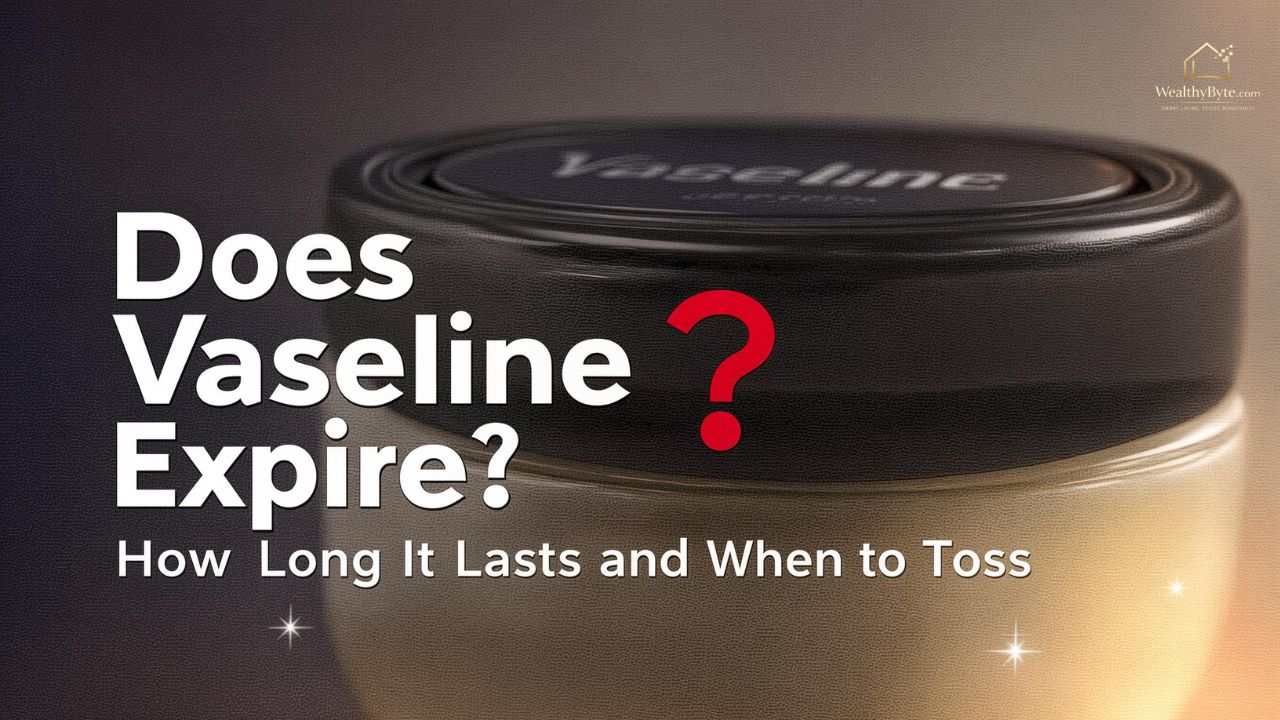
That half-used jar in the back of your drawer looks harmless, but it still raises the same question every time you pick it up: does vaseline expire? It is one of those products people keep for years because it seems too simple to go bad, yet no one wants to rub an old product on dry lips, cracked skin, or a healing scrape without knowing if it is still safe.
The confusing part is that Vaseline Healing Jelly is not like a typical cream. Vaseline says the jelly is anhydrous, which means it does not contain water and is not likely to develop bacterial growth over time. The brand also describes Original Healing Jelly as 100% pure white petrolatum, while the FDA explains that cosmetic expiration labeling is not always required in the United States, even though manufacturers are still responsible for product safety.
That mix of high stability and inconsistent labeling is why so many people are unsure what to trust: the date on the package, the look of the jelly, or the fact that petroleum jelly often lasts longer than other skincare products. The good news is that the answer is pretty simple once you know what the label means, what warning signs matter, and how storage changes everything.
In this guide, you will learn when an old jar is probably still fine, when it should go straight into the trash, and why pure petroleum jelly usually behaves very differently from lotions, balms, or creams with extra ingredients. That distinction matters because Original Healing Jelly is sold as a skin protectant, and the safest move is always to match your decision to the printed label and the product’s condition.
Improveville.org shares simple health, wellness, fitness, nutrition, skincare, and lifestyle tips to help readers make better daily choices for a healthier life.
Does Vaseline Expire? What the Label Really Means
The honest answer is yes, you should treat Vaseline as a product with a usable life, not as something immortal. Vaseline’s own guidance says the jelly has an expiry date and tells users to check the label before applying it. At the same time, the brand explains why the product tends to last a long time: it is triple-purified and anhydrous, so it is less prone to the kind of bacterial growth that can trouble water-based formulas.
That is why this topic feels more nuanced than a simple yes or no. If you are asking does vaseline expire, the practical answer is “follow the date if one is printed, and respect the condition of the product even more.” The FDA says cosmetic companies in the U.S. are not required to place specific shelf lives or expiration dates on labels, so a missing date does not automatically mean the product is unsafe or endless. It means the manufacturer, packaging, and storage conditions all matter.
Why petroleum jelly lasts longer than many skincare products
Original Vaseline Healing Jelly is unusually simple. Vaseline describes it as 100% pure white petrolatum, and the brand repeatedly points to its occlusive barrier properties and high purity. Because it is not a water-heavy cream, it does not create the same easy environment for bacterial growth that many emulsions and richer cosmetic formulas do.
That simplicity helps explain why an old jar of plain petroleum jelly often seems perfectly normal long after you opened it. It is also why people sometimes assume it never goes bad. Still, “stable” does not mean “indestructible.” Heat, sunlight, contamination from fingers, and poor storage can still affect a product over time, even when the base ingredient itself is very durable. The FDA says cosmetics exposed to high temperatures or sunlight may deteriorate substantially before any expiration date, while products stored under ideal conditions may remain acceptable longer.
Does Vaseline expire after opening?
Opening the jar changes the story because the product now meets air, hands, bathroom humidity, dust, and whatever else comes into contact with it. In markets that use the open-jar symbol, regulators treat the “period after opening” as the stretch of time a cosmetic can be used after first opening without harming the consumer. European Commission guidance explains that this symbol is used to show how long a product remains suitable after opening, especially for products with minimum durability over 30 months.
So yes, opened Vaseline deserves more caution than an unopened jar. Even if the jelly base is stable, the way you use it matters. A tightly sealed jar kept in a cool drawer usually ages much better than one left open on a hot bathroom shelf or handled with wet fingers after a shower. That is not marketing fluff. It is exactly the kind of storage-related deterioration the FDA warns about.
Amble Health provides reliable health tips, wellness guidance, and expert-backed information to help you live a healthier, happier, and more balanced life.
How to tell when an old jar is no longer worth using
A jar does not need to look scary to be past its best days. With petroleum jelly, the bigger issue is often not dramatic spoilage but gradual deterioration or contamination. Since the FDA notes that improperly stored cosmetics can deteriorate before the printed date and that contamination risk rises with handling, the smartest approach is to inspect both the jar and the jelly before every use.
Here are the most useful warning signs:
- the product smells different than it did when new
- the texture is no longer smooth and even
- you can see dust, lint, debris, or signs of dirty fingers in the jar
- the container is cracked, damaged, rusted, or no longer seals properly
- the jelly has clearly been melted and re-solidified more than once
- the printed expiry date has passed and the product also looks or feels off
These are practical red flags based on the way cosmetic products deteriorate with heat, light, and contamination.
A lot of people ask whether a slightly old jar is still okay if it “looks fine.” In many cases, plain petroleum jelly may still appear stable because the formula is simple and water-free. But if you plan to use it on cracked skin, chafing, or minor scrapes, caution matters more. Vaseline Healing Jelly is listed by DailyMed as a topical skin protectant for minor cuts, scrapes, and burns, so it makes sense to be pickier with any jar you use on irritated or broken skin.
One more point many people miss: not every Vaseline-branded product behaves the same way. Original Healing Jelly is the most stable type because it is built around white petrolatum. Lip products, lotions, tinted formulas, and scented versions may include extra ingredients that can age differently. So do not assume an old lip balm tin should be judged the same way as a basic jar of Healing Jelly. That is a reasonable inference from the much simpler ingredient profile of the original jelly.
What the label, jar, and symbol can tell you
If your package has an expiration date, that is your first checkpoint. Vaseline says to check the product label, and that remains the cleanest answer. If the outer carton is gone and the jar itself shows no date, you are left with three other clues: the product’s condition, how it has been stored, and whether it carries a period-after-opening symbol in your market.
The open-jar symbol is useful if you see it. European Commission guidance explains that the symbol is paired with a number of months or years and tells you how long the product can be used after first opening without harm to the consumer. So a “12M” symbol, for example, means 12 months after opening, not 12 months from the manufacturing date.
In the United States, the label may be less direct. The FDA says there is no general legal requirement for cosmetics to carry specific expiration dates, which is one reason shoppers often end up guessing. That makes common-sense tracking helpful. If you open a new jar, write the month and year on the bottom with a marker. That tiny habit removes a lot of uncertainty later.
Best storage habits to make it last longer
If you want a jar to stay usable as long as possible, storage is not a small detail. It is the whole game. The FDA specifically warns that cosmetics exposed to high temperatures or sunlight may deteriorate before the expiration date, while well-stored products may remain acceptable longer. That advice matters even more for products people keep for months or years.
The best place for plain petroleum jelly is a cool, dry, dark spot with the lid tightly closed. A bedroom drawer or cabinet is usually better than a windowsill, car, or steamy bathroom shelf. If you use it frequently, try taking out a small amount with clean hands or a clean spatula instead of dipping in right after washing up, when your fingers may still carry water or residue. That reduces avoidable contamination.
Sharing is another quiet way products age badly. The FDA notes that shared cosmetics carry more contamination risk, and while petroleum jelly is not mascara, the same principle still applies. A family jar used on lips, hands, elbows, and minor skin issues by multiple people is simply exposed to more germs, more debris, and more chances to be left open.
When it is probably fine to keep using it
A jar is often still worth keeping when all of the following are true: the label date has not passed or is unknown but reasonable, the product looks and smells normal, the lid still seals well, and the jar has been stored away from heat and light. That fits what Vaseline says about the jelly’s long shelf life and what the FDA says about products holding up better under ideal storage conditions.
This is especially true for plain Original Healing Jelly used as a moisture barrier on dry elbows, heels, hands, or lips. Vaseline describes the formula as non-irritating, hypoallergenic, fragrance-free, and 100% pure white petrolatum, which is one reason it has remained a basic skin protectant for generations.
That said, “probably fine” should not turn into “use it forever no matter what.” If the jar is very old, has lived through hot summers, or has been opened and re-opened for years, replacing it may simply be the better choice. Petroleum jelly is not usually expensive, and peace of mind is worth something, especially when your skin is already irritated.
When you should throw it out without debating
There are times when the safest answer is just to replace it. Toss the jar if it is past the printed date and seems altered in any way, if the lid no longer closes tightly, if the texture has changed a lot, or if it has obviously picked up dirt or debris. Also replace it if it has been stored in harsh heat, direct sun, or a damp environment for a long time. Those are the very conditions the FDA points to when explaining early product deterioration.
You should also be stricter if you want to use the product on sensitive situations, such as very dry cracked skin, a baby’s skin, or minor cuts and scrapes. Original Vaseline Healing Jelly is marketed as a skin protectant, so using a fresh, well-kept jar makes more sense than gambling on one you found in an old travel bag.
And if you ever find yourself trying to convince yourself that a jar is “probably okay,” that is often your answer. When the product is cheap to replace and the signs are muddy, replacing it is easier than second-guessing your skin for the next week. That is the most practical way to answer does vaseline expire in real life: trust the label, trust the storage history, and trust your eyes.
FAQ
Does vaseline expire if it is unopened?
It can still have a usable date even if it is unopened. Vaseline says the jelly has an expiry date, and European cosmetic guidance shows that some products with long durability may use other labeling systems instead of a traditional date. An unopened jar usually has the best chance of staying stable because it has not been exposed to hands, air, or bathroom humidity.
Can I use Vaseline after the expiration date?
Maybe, but only with caution. The FDA says products stored under ideal conditions may remain acceptable past the expiration date, yet poorly stored products may deteriorate before it. If the date has passed and anything about the jar seems off, replacing it is the better call.
Does Vaseline go bad faster in the bathroom?
It can. Heat, sunlight, and moisture are not good for long-term cosmetic storage, and the FDA specifically warns that high temperatures and sunlight can make products deteriorate sooner. A cool, dry drawer is safer than a warm bathroom shelf.
Is expired Vaseline dangerous?
Not always, but it is not worth treating casually. Plain petroleum jelly is relatively stable because it is anhydrous and highly purified, yet contamination and storage damage can still make an old jar less trustworthy. Be stricter when using it on irritated or broken skin.
How long does Vaseline last after opening?
There is no one universal answer because the label, market, packaging, and storage conditions all play a role. If your product has a period-after-opening symbol, use that. If it has a printed expiration date, follow it. If it has neither, judge it by storage history and condition, not wishful thinking.
Can bacteria grow in Vaseline?
Vaseline says its jelly is anhydrous and therefore not likely to develop bacterial growth over time. That does not mean contamination is impossible once you start dipping fingers into the jar. The formula is stable, but your handling still matters.
Is Vaseline Healing Jelly the same as other Vaseline products for shelf life?
Not exactly. Original Healing Jelly is described by the brand as 100% pure white petrolatum, which makes it much simpler than lotions or other specialized formulas. Products with extra ingredients may not behave the same way over time.
What should I do if my Vaseline has no visible date?
Check the jar for a period-after-opening symbol, keep track of when you opened it, and inspect the product closely before use. The FDA does not require all cosmetics in the U.S. to carry specific expiration dates, so missing date information is not unusual.
Conclusion
So, does vaseline expire? Yes, in the practical sense that every jar has a point where the label, storage conditions, or product condition says it is time to stop using it. The twist is that plain Vaseline Healing Jelly is far more stable than many skincare products because it is highly purified, anhydrous, and built around white petrolatum. That is why it often lasts a long time when stored well.
The best rule is simple: check the date if one exists, notice the product’s appearance, and think honestly about where it has been stored. If it looks normal, was kept cool and clean, and has not been abused by heat or dirty fingers, it may still be fine. If anything feels questionable, replace it and move on. Your skin will not miss the mystery jar.